

 Aquariums & Supplies

 Coral Reef Aquariums & Supplies

 Garden & Hydroponics & Landscape

 Ponds & Fountains & Waterfalls

 Drum Pond Filter

 Community

 Help Center
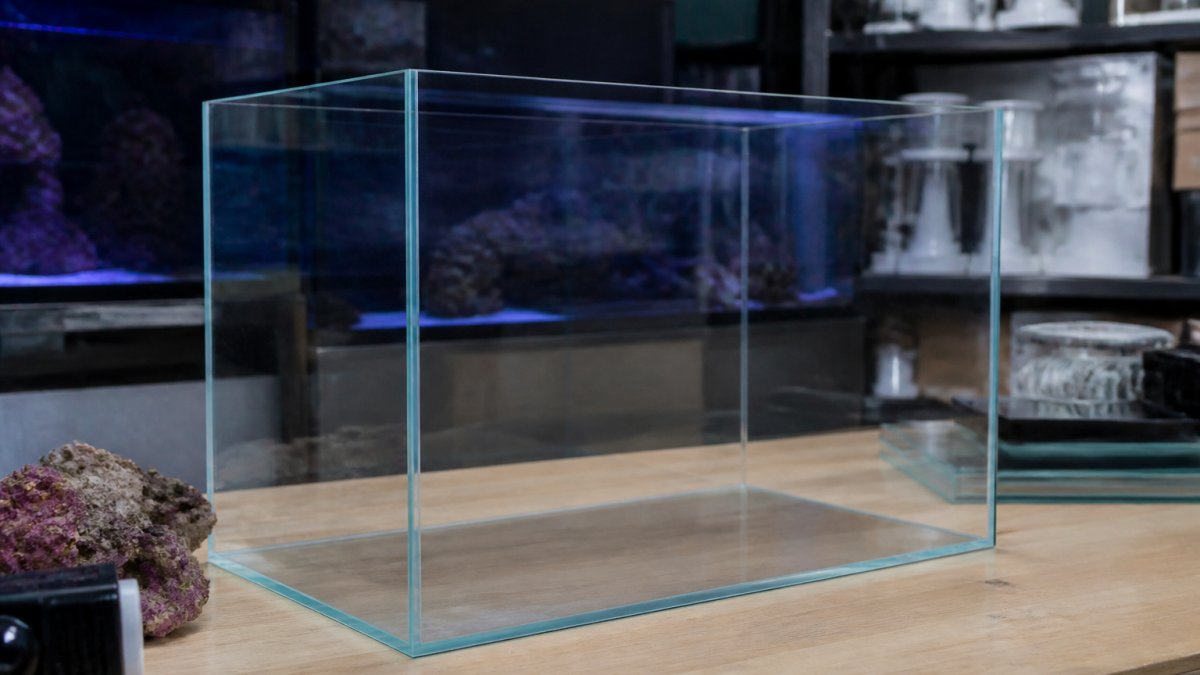
Table of Contents
- Quick Comparison of Top Low-Iron Glass Reef Tanks
- Low-Iron vs. Regular Glass Aquarium: Why It Matters for Reef
- Reef Tank Glass Thickness and Safety Standards
- Rimless Reef Tank Design and Unobstructed Viewing
- Available Tank Sizes and Capacities for Reef Setups
- Reef Aquarium Tank and Stand: Complete All-in-One Systems
- Care, Maintenance, and Scratch Prevention for Low-Iron Glass
- Frequently Asked Questions
Last Updated: October 16, 2026
Quick Comparison of Top Low-Iron Glass Reef Tanks
Choosing the right low-iron glass tanks for reef setups means balancing clarity, durability, and total system cost. The difference between low-iron and standard glass matters more than most aquarists realize. Standard glass has a green tint that distorts color perception, making corals appear dull and fish colors muted. Low-iron glass eliminates that tint, delivering over 91.5% light transmittance for true-to-life color representation.
At AquaDreamUSA, we've been designing reef systems since 1999, and we've learned that crystal-clear viewing panels are only part of the equation. You also need proper glass thickness, rimless design for unobstructed viewing, and a sump system that handles saltwater filtration demands. Below is a quick look at our top options across different tank sizes and budgets.
| Tank Size | Total Capacity | Stand Color | Starting Price | Best For |
|---|---|---|---|---|
| 37 Gallon | 37 gal (24 tank + 13 sump) | White | $1,499.00 | Nano reef enthusiasts |
| 50 Gallon | 50 gal (33 tank + 17 sump) | White | $1,699.00 | Beginner reef setups |
| 63 Gallon | 63 gal (40 tank + 23 sump) | Black | $1,899.00 | Intermediate coral keepers |
| 100 Gallon | 100 gal (63 tank + 36 sump) | Black/White/Silver | $2,499.00 | Serious reef builders |
| 115 Gallon | 115 gal (73 tank + 41 sump) | White | $2,699.00 | Advanced aquascapers |
| 130 Gallon | 130 gal (95 tank + 35 sump) | Black | $2,899.00 | Large reef displays |
| 250 Gallon | 250 gal (192 tank + 58 sump) | Black | $6,382.99 | Commercial/premium displays |
Low-Iron vs. Regular Glass Aquarium: Why It Matters for Reef
Standard glass contains iron oxide, which creates a noticeable green tint when viewed edge-on or at certain angles. This tint accumulates as light passes through the glass, distorting how corals and fish actually appear. For reef keepers, this is more than a cosmetic issue, it affects how you monitor coral health, judge color vibrancy, and evaluate livestock quality.

Low-iron glass removes that green cast entirely. The result is a crystal-clear viewing experience where corals display their true colors: vibrant reds, oranges, yellows, and purples without the filter of green tint. This clarity matters when you're investing hundreds or thousands of dollars in coral specimens. You need to see exactly what you're buying and how your corals are responding to your lighting and water parameters.
According to reef aquarium best practices from the Marine Aquarium Societies of North America, color accuracy is essential for monitoring coral stress and health. When you can't see true color, you miss early warning signs of bleaching or nutrient deficiency. Low-iron glass eliminates that blind spot.
The trade-off is cost. Low-iron glass costs more to manufacture than standard glass, so tanks made with it carry a premium. For casual freshwater setups, standard glass is fine. For reef tanks where color accuracy and light transmission directly impact your success, low-iron glass is the right choice.
Reef Tank Glass Thickness and Safety Standards
Glass thickness determines how much pressure the tank can safely withstand. Thicker glass distributes water weight more evenly across the panel, reducing stress at seams and corners where leaks most commonly develop. For reef tanks, this matters because you're running high-powered lighting, circulation, and often heavier rock structures than freshwater setups.
All of our low-iron glass tanks feature 0.5-inch thick glass construction.
For the 250-gallon tank, the larger footprint and greater water mass require the same 0.5-inch thickness.
Rimless Reef Tank Design and Unobstructed Viewing
A rimless design removes the plastic or aluminum frame that typically runs around the top edge of an aquarium. This design choice has two practical benefits: it eliminates visual obstruction and it simplifies maintenance access.
With rimless construction, you get a completely unobstructed view of your reef from all angles. There's no plastic frame catching light, no edge distortion, and no visual break between you and your aquatic landscape. For aquascaping and planted tank displays, this unobstructed viewing makes a dramatic difference in how the tank feels as a focal point in a room.
The second benefit is maintenance. Rimless tanks allow you to reach the back corners and edges without your hand hitting a frame lip. For reef keepers who need to position rockwork, adjust equipment, or clean algae from panel edges, this accessibility is invaluable. Standard framed tanks force you to work around the plastic, which limits your reach and control.
Rimless design does require one trade-off: you need a protective mesh lid if you keep jumpers or have cats in the house. Several of our tanks include this optional feature, and it's worth considering if you have curious pets or species known for escaping.
Available Tank Sizes and Capacities for Reef Setups
Reef tank size determines what corals and fish you can sustainably keep. Smaller tanks have less water volume to buffer against parameter swings, so they demand more frequent testing and adjustment. Larger tanks are more forgiving but require more equipment and space.
Our lineup spans from 37 gallons to 250 gallons, covering every experience level and space constraint.
Nano and Small Reef Tanks (37-50 gallons): These are ideal for aquarists starting their first reef or working in space-limited environments. The 37-gallon system includes a 24-gallon display tank plus a 13-gallon sump. The 50-gallon system steps up to a 33-gallon display with a 17-gallon sump. Both sizes work well for beginner-friendly corals like zoanthids, mushrooms, and hardy SPS species. Sump capacity is adequate for basic protein skimming and mechanical filtration.
Mid-Range Reef Tanks (63-100 gallons): The 63-gallon system offers 40 gallons of display space plus a 23-gallon sump, striking a balance between aquascaping options and parameter stability. The 100-gallon systems come in three color options (black, white, silver) with 63 gallons of display and 36 gallons of sump. This size range is where most intermediate reef keepers find their sweet spot, enough volume for diverse coral placement and fish stocking, enough sump capacity for quality filtration.
Large Display Tanks (115-130 gallons): At 115 gallons, you get 73 gallons of display tank plus 41 gallons of sump, ample space for sophisticated aquascaping and complex reef layouts. The 130-gallon system pushes to 95 gallons of display tank with 35 gallons of sump. These sizes support advanced SPS-dominant layouts, large fish communities, and systems running multiple specialized filtration components.

Premium Systems (250 gallons): The 250-gallon all-in-one represents the pinnacle, 192 gallons of display tank plus 58 gallons of sump. This is the choice for commercial installations, office centerpieces, or serious aquarists who want to showcase a truly impressive reef ecosystem.
63 Gallon All-in-One Reef Aquarium | Ultra-Clear Low-Iron Glass Tank →
Reef Aquarium Tank and Stand: Complete All-in-One Systems
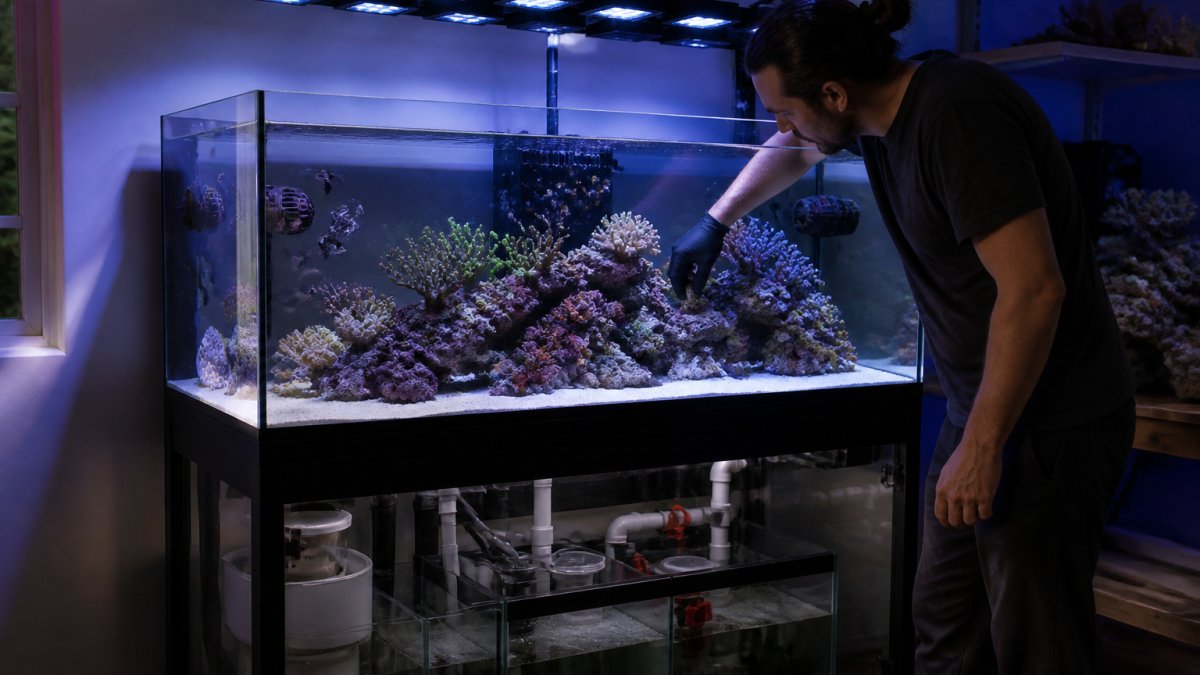
All of our low-iron glass tanks for reef setups ship as complete all-in-one systems. This means you receive the display tank, a pre-assembled cabinet stand, and a fully integrated sump filtration system with all plumbing included. You don't need to source separate components or hire a contractor, everything arrives ready to set up.
The cabinet stands are built to last. They're waterproof, corrosion-resistant, and finished with a matte surface that resists fingerprints and water spots. Whether you choose black, white, or silver, the stand won't warp, fade, or deteriorate over years of saltwater exposure and humidity. This durability matters because a reef setup is a long-term investment, and your stand needs to support it reliably.
Each sump system includes a filter sock chamber for mechanical filtration, a dedicated protein skimmer section, a top-off reservoir for auto-top-off systems, a customizable compartment for additional media or equipment, and a return pump bay. The random-flow return pump outlet ensures superior water distribution throughout the display tank, while the adjustable water return pipe gives you precise control over flow rate between sump and display. Maintaining this delicate balance of flow and filtration requires a thorough understanding of how different aquarium filter systems integrate with your specific sump configuration to ensure long-term stability.
All plumbing ships complete with the tank. You won't need to purchase additional PVC, fittings, or tubing. For saltwater setups, this is a major advantage because saltwater corrosion can degrade standard plumbing over time. Our systems are engineered with saltwater durability in mind.
For example, the 63 Gallon All-in-One Reef Aquarium features a 23-gallon sump that's proportionally sized to handle the bioload and filtration demands of a 40-gallon display tank. You're not over-engineered or under-equipped, the system is balanced for reef success.
Care, Maintenance, and Scratch Prevention for Low-Iron Glass
Low-iron glass is more expensive than standard glass, so protecting it from scratches and damage makes financial sense. Scratches don't just look bad, they scatter light and create stress points where cracks can propagate.
The first rule is to avoid abrasive materials inside the tank. Never use rough scrubbing pads or steel wool on glass panels. Use soft algae scrapers with plastic or rubber blades instead. If you need to clean dried salt creep or stubborn algae, use a soft cloth and a gentle algae remover designed for aquariums.
Second, manage the aquascaping carefully. Avoid dragging sharp rocks or hardscape directly across the bottom glass. Use a substrate base or lay rocks gently rather than sliding them. Even small scratches compound over time, and once the glass is damaged, you can't restore it, you can only prevent further damage.
Third, protect the tank from thermal shock. Avoid rapid temperature changes, which can cause micro-fractures in glass. When performing water changes, match the temperature of new water to the tank water. When cleaning or servicing equipment near the tank, don't splash cold water on warm glass panels.
According to aquarium maintenance guidelines from the Association of Zoos and Aquariums, routine gentle care extends glass lifespan indefinitely. Most damage happens through carelessness rather than inherent glass weakness.
Fourth, use a protective mesh lid if you have the option. It prevents accidental impacts from above and keeps debris out of the tank. For the 37-gallon and 50-gallon systems, an optional protective mesh lid is available on request.
Finally, inspect silicone seams regularly.
Choosing the right low-iron glass tanks for reef setups comes down to matching tank size to your experience level, budget, and space. Whether you're starting your first nano reef or building a 250-gallon showpiece, we have the platform to support your vision. SHOP NOW and start building your reef today.
Frequently Asked Questions
What is low-iron glass in an aquarium?
Low-iron glass is ultra-clear aquarium glass with reduced iron oxide content, which removes the green tint found in standard glass. This results in over 91.5% light transmittance, delivering true-to-life color representation of your corals and fish. Low-iron glass is essential for reef tanks where accurate light spectrum and vivid color display matter for both aesthetics and coral health.
Is low-iron glass worth it for a reef tank?
Yes, low-iron glass is worth the investment for reef setups. It provides superior color accuracy, unobstructed viewing clarity, and better light transmission for photosynthetic corals. The 0.5-inch thick construction resists scratches, fingerprints, and acids/alkalis common in saltwater environments, ensuring durability and long-term visual clarity that standard glass cannot match.
What is the difference between low-iron and regular aquarium glass?
Standard glass contains iron oxide, which creates a green tint that distorts color representation and reduces light transmission to around 85%. Low-iron glass eliminates this tint, achieving 91.5%+ light transmittance and true color display. For reef tanks, this difference is critical: corals appear vibrant, light penetrates deeper, and photosynthetic corals receive more usable spectrum for growth.
What thickness of glass is best for a reef aquarium?
0.5-inch thick glass provides structural integrity for the water weight, resists scratches and impact from equipment and maintenance, and handles the stress of saltwater environments.
How do you clean and maintain a low-iron glass aquarium?
Use soft, lint-free cloths to avoid scratches on the ultra-clear surface. Avoid abrasive cleaners; instead, use distilled water or a 50/50 vinegar-water solution for stubborn deposits. Never use paper towels or rough sponges. For the exterior, wipe regularly to prevent fingerprints and smudges. The low-iron glass resists acids and alkalis from saltwater, but gentle handling extends its clarity and appearance.