

 Aquariums & Supplies

 Coral Reef Aquariums & Supplies

 Garden & Hydroponics & Landscape

 Ponds & Fountains & Waterfalls

 Drum Pond Filter

 Community

 Help Center
Table of Contents
- Diagnose the Cause of Your Murky Pond Water
- How to Clear Green Pond Water with Algae Control
- How to Clear Brown Pond Water and Fine Sediment
- Install or Upgrade Your Pond Filtration System
- Boost Water Circulation and Aeration
- How Long Does It Take for Pond Water to Clear
- Prevent Murky Water From Returning
- Frequently Asked Questions
Last Updated: October 12, 2026
Diagnose the Cause of Your Murky Pond Water
Before you can clear murky pond water, you need to know the cause: suspended algae (green water) or sediment and organic debris (brown or gray water). Which one you have changes your entire treatment approach.
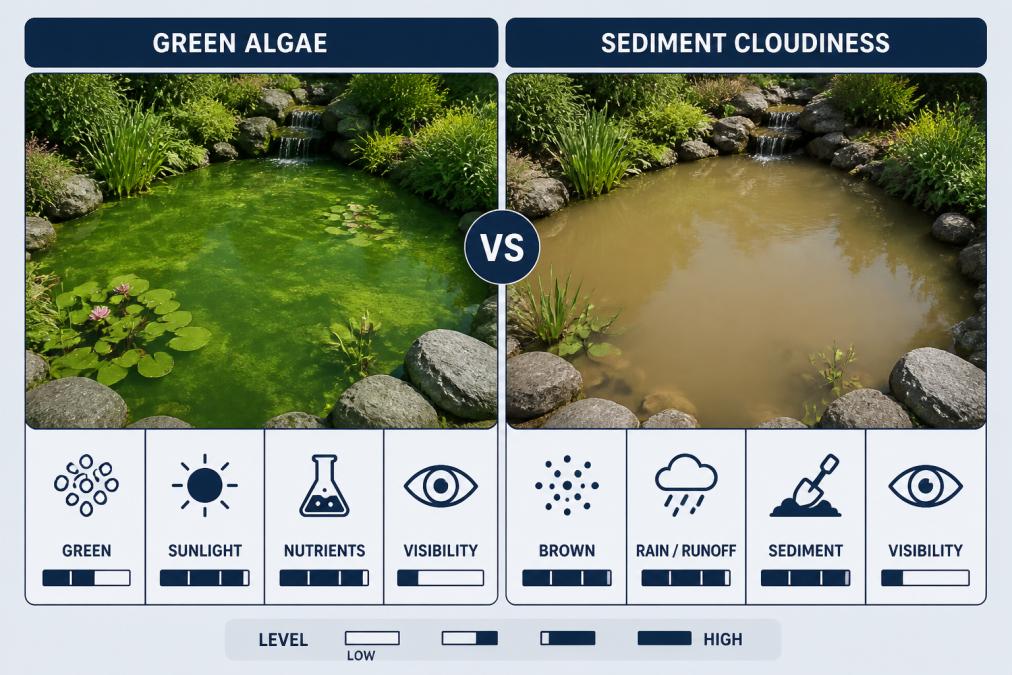
Green Water: Suspended Algae
Green water happens when millions of tiny algae cells float freely, blocking light and turning the water pea-soup green. It may smell earthy or musty, and visibility drops fast.
Suspended algae thrives when sunlight, nutrients, and warmth align. Fish waste, uneaten food, and decaying leaves add nitrogen and phosphorus that feed it, and without filtration or circulation it multiplies unchecked.
Brown or Gray Water: Sediment and Organic Debris
Brown or gray water means fine particles, clay, silt, decaying plant matter, or unsettled fish waste, are suspended throughout. Unlike algae water, it often clears slightly when the pond is still.
Sediment clouds develop after heavy rain, when the bottom is disturbed, or when organics break down faster than your filter can handle. Fine clay is stubborn because basic filters let it pass through.
How to Clear Green Pond Water with Algae Control
Green water needs a multi-step approach, no single chemical fixes it. Combine UV treatment, beneficial bacteria, and better circulation.
Reduce sunlight exposure. Add floating plants like water lilies or lotus, they block sunlight and compete with algae for nutrients, and even partial shade helps.
Stop overfeeding fish. Extra food decays into algae fuel. Feed only what your fish eat in 3-5 minutes, and remove leftovers after 10 minutes.
How to Clear Brown Pond Water and Fine Sediment
Brown water from sediment requires a different strategy: getting particles small enough to trap in a filter.
Increase water circulation. A good pump keeps water moving so sediment doesn't settle into stagnant dead zones, flowing steadily through your filtration system.
Clean the pond bottom carefully. Use a pond vacuum and work slowly. Manual cleaning temporarily worsens the water but removes the source of the problem.
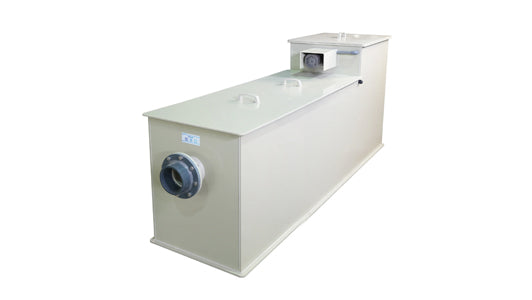
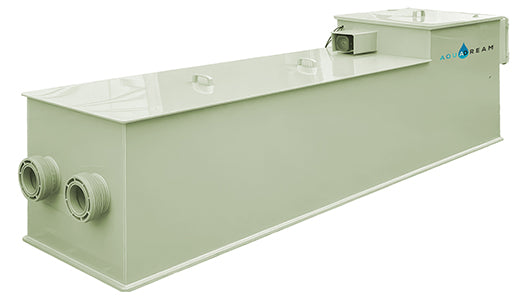
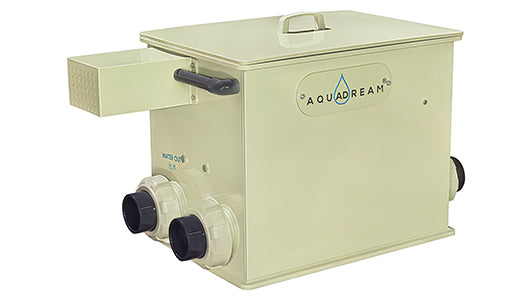
Upgrade your mechanical filtration. Standard filters might not catch fine particles. The BTS5 Automatic Drum Micro Filter combines mechanical filtration with self-cleaning backwash, so debris doesn't clog your system.

Install or Upgrade Your Pond Filtration System
Filtration is the backbone of clear water, but "upgrade your filter" is useless without numbers. The right system depends on your pond's volume, fish load, and the particle size you're removing, match it to the cause you diagnosed.
Mechanical vs. biological filtration: what each one actually removes
Mechanical filtration physically traps particles. The critical spec is the micron rating, the size of the openings in the media. This is where most pond owners get burned:
- Coarse media (pads, brushes, matting): catches particles roughly 100 microns and larger. Good for leaves, large debris, and fish waste. Fine clay and suspended algae pass straight through.
- Fine media (filter floss, micro-mesh): catches particles down to roughly 50 microns. This is the range where clay and silt start getting captured.
- Micro-mesh drum filters: capture particles at 50 microns and below, which is why they handle the stubborn brown-water sediment that basic pads miss.
Biological filtration is a separate job: it grows nitrifying bacteria that convert toxic ammonia into nitrite and then into far less harmful nitrate. Mechanical filtration must come first, or trapped debris smothers the bacteria bed. A common pattern is a two-stage system, mechanical capture, then a biological chamber with high surface-area media such as moving-bed media or ceramic rings.
Size your filter to your pond, not to the box label
The most common mistake is buying a filter rated for a smaller pond than you have, ratings assume a light fish load and temperate climate. Use these rules of thumb:
BTS-10 Automatic Drum Micro Filter Pond Filtration System | 2,690 GPH →
- Turnover rate: the entire pond volume should pass through the filter at least once every 2 hours for koi ponds, and once every 2-4 hours for lightly stocked ornamental or wildlife ponds.
- Calculate your volume first. For a rectangular pond: length × width × average depth × 7.48 = gallons. For irregular ponds, break the shape into sections and add them.
- Derate for fish load. If you have koi or a heavy goldfish population, size the filter for roughly double the pond's volume. A 1,000-gallon koi pond should be running a filter rated for about 2,000 gallons.
Example: a 1,200-gallon pond with a moderate fish load needs at least 600 GPH for a 2-hour turnover, and closer to 1,200 GPH with headroom for a koi load.
Match the filter type to the cause
- Green water (suspended algae): mechanical filtration alone won't fix it. You need a UV clarifier in line after the mechanical stage, plus biological filtration to strip the nutrients feeding the algae.
- Brown water (fine clay/silt): you need fine mechanical media or a micro-mesh drum filter. Coarse pads will never catch clay.
- Persistent cloudiness with normal tests: this usually points to undersized filtration or a filter that's clogged and channeling water around the media instead of through it.
Drum filters: when the upgrade is worth it
Drum filters use a rotating micro-mesh screen that captures fine particles and backwashes itself automatically when the screen loads up. They shine in koi and ornamental ponds where fine sediment and heavy bioload make manual cleaning a constant chore. Trade-offs: higher upfront cost, a steady water supply for backwashing, and a pump strong enough to drive the spray bars. For a small wildlife pond with a light fish load, a simple mechanical-plus-biological combo is better value.
Maintenance intervals that keep water clear
- Mechanical pads/floss: rinse or replace every 1-2 weeks during warm months, more often in peak algae season.
- Biological media: rinse gently in pond water only, never tap water, which kills the bacteria. Do this every 4-8 weeks.
- Drum filter screens: check monthly; the self-cleaning cycle handles most debris, but the spray nozzles can clog with mineral deposits.
Boost Water Circulation and Aeration
Circulation and aeration keep clear water from sliding back into murk, but "keep the water moving" is not a plan. You need target numbers for flow and oxygen, adjusted for your pond type.
Why moving water clears faster
- Particle transport: flow pushes suspended particles toward the filter intake instead of letting them settle into dead zones where they decay.
- Bacterial distribution: circulation spreads oxygen and waste contact throughout the pond rather than concentrating them in one spot.
- Oxygen for decomposition: aerobic bacteria break down sludge far faster than anaerobic bacteria, which produce foul odors and release nutrients back into the water.
Set a flow target, then measure it
Aim for the full pond volume to circulate at least once every 2-4 hours. For a 1,500-gallon pond, that means a pump moving roughly 375-750 GPH minimum.
To check actual flow, time how long it takes to fill a 5-gallon bucket from your return line, then multiply. If a pump rated for 1,000 GPH measures 600 GPH at the return, the difference is head loss from pipe length, fittings, and elevation, normal.
Aeration: oxygen is the hidden variable
Dissolved oxygen (DO) separates a pond that digests waste from one that accumulates it. Most keepers don't own a DO meter, but a few rules of thumb keep you safe:
- Warm water holds less oxygen. A pond at 80°F holds meaningfully less DO than the same pond at 60°F, which is why summer is when murky water and fish stress spike together (Dissolved Oxygen and Water).
- Aeration at night matters most. Plants and algae consume oxygen after dark. With a heavy plant or algae load, nighttime DO can crash.
- Surface agitation is the cheapest oxygen. A fountain, waterfall, or air stone that breaks the surface adds oxygen far more efficiently than bubbling air through deep water alone.
For a typical backyard pond, one air pump rated for your volume running 24/7 keeps DO healthy. In hot weather or heavily stocked ponds, add a second air stone near the bottom.
Position intake and return for a circular flow pattern
- Draw from the bottom. Sediment collects low, so the intake should sit near the deepest point.
- Return at the opposite end, angled to create a slow rotation. A gentle circular current sweeps debris toward the intake instead of letting it settle.
- Avoid dead zones. Corners, behind rocks, and under overhangs are where muck builds. A small secondary pump or air stone keeps them moving.
Adjust for your pond type
- Koi ponds: high flow and strong aeration are non-negotiable, koi produce a heavy waste load and the biofilter needs steady oxygen. Target turnover of once every 1-2 hours.
- Wildlife ponds: gentler flow. Frogs, newts, and beneficial insects prefer calmer water, so aim for once every 3-4 hours and use aeration rather than a strong current.
- New ponds: circulation is critical in the first season while the biofilter establishes. Run the pump continuously and expect slight cloudiness for the first few weeks.
How Long Does It Take for Pond Water to Clear
Realistic timelines depend on the cause and your treatment approach.
Green water from algae: Expect 5-14 days with UV clarification and beneficial bacteria. UV works fastest, but bacteria need time to establish.
Brown water from sediment: Fine particles settle in 24-48 hours if you use a flocculant.
Prevention is faster than cure. Once water clears, maintaining it takes far less effort than clearing it again.
Prevent Murky Water From Returning
Once your water clears, keep it that way with these practices:
- Test water regularly. Check ammonia, nitrite, and nitrate. High nutrients invite algae. Aim for zero ammonia and nitrite, and nitrate below 40 ppm.
- Don't overfeed fish. Feed once or twice daily, only what they finish in 3-5 minutes.
- Remove debris weekly. Fallen leaves and dead plant matter decay into nutrients that fuel algae. Skim the surface and clean the bottom.
Murky pond water frustrates any pond keeper, but it's fixable. Diagnose whether you're fighting algae or sediment, then apply the right treatment. At AquaDreamUSA, we offer the right filtration and maintenance approach to restore crystal-clear water. Start by upgrading your mechanical filtration if you haven't already. A professional-grade system like our drum filter series removes suspended particles automatically and prevents the cloudiness from returning.
| Problem | Cause | Primary Treatment | Timeline |
|---|---|---|---|
| Green water | Suspended algae | UV clarifier + beneficial bacteria | 5-14 days |
| Brown water | Fine sediment | Flocculant + mechanical filter | 1-7 days |
| Persistent cloudiness | Poor filtration | Upgrade to drum filter system | Ongoing improvement |
| Water stays cloudy | Inadequate circulation | Add circulation pump | 3-7 days |
Frequently Asked Questions
How can I tell whether murky pond water is caused by algae or sediment?
Green water that smells earthy or looks soupy indicates suspended algae; brown or gray water that clears slightly when you stop the pump suggests sediment and organic debris. Test by filling a clear glass with pond water. If it stays green after 10 minutes, algae is present. If particles settle to the bottom, sediment is the primary issue. Both problems reduce water clarity, but treatment differs: algae needs UV clarifiers and beneficial bacteria, while sediment requires mechanical filtration and flocculants.
Will a pond filter or fountain clear cloudy water?
A quality pond filtration system removes suspended particles and organic matter, restoring clarity over time. Fountains improve water circulation and aeration, which helps beneficial bacteria thrive, but they alone won't clear murky water. For best results, combine both: use a drum filter or mechanical filter to capture particles, add a UV clarifier to eliminate algae, and run a pump or fountain to keep water moving. The BTS5 Automatic Drum Micro Filter handles particles as small as 50 micrometers, delivering clear water without constant maintenance.
How long does it take for murky pond water to clear?
With proper treatment, most ponds show visible improvement in 3 to 7 days. Sediment-heavy water clears faster (2 to 5 days) once flocculants settle particles and filtration removes them. Algae-filled water takes longer (5 to 14 days) because UV clarifiers and beneficial bacteria need time to work. Complete crystal-clear water may take 2 to 4 weeks depending on pond size, filtration capacity, and water circulation. Larger ponds (over 2,500 gallons) take longer than small ponds.
What kills algae but not fish?
UV clarifiers and beneficial bacteria are fish-safe algae controls. UV sterilizers eliminate suspended algae without chemicals; beneficial bacteria and enzymes consume excess nutrients that feed algae growth. Flocculants designed for aquatic use also work safely with fish. Avoid copper-based treatments and harsh chemicals, which harm fish and disrupt water balance. Mechanical filtration paired with aeration and water changes removes algae and organic waste naturally. Always test water quality and maintain proper oxygen levels to keep fish healthy during treatment.