

 水族箱及用品
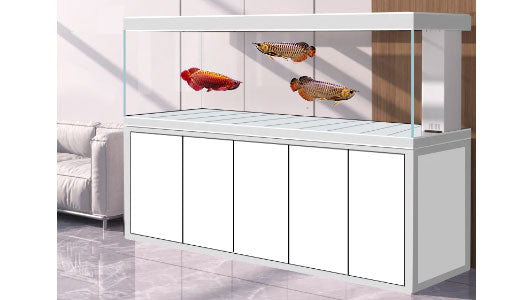

 珊瑚礁水族箱及用品
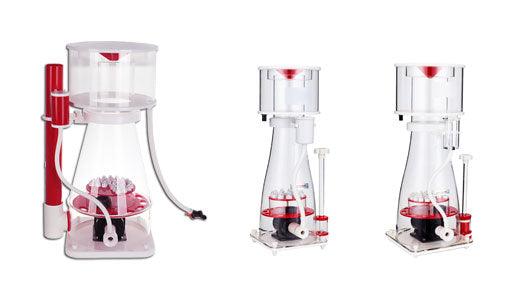

 花园、水培和景观

 池塘、喷泉和瀑布
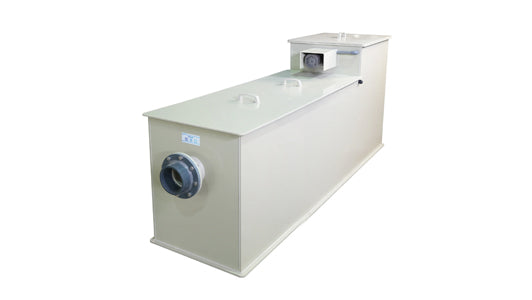

 滚筒式池塘过滤器

 社区
社区

 帮助中心
帮助中心

How to Transition From Freshwater to Saltwater
Table of Contents
- Can You Convert a Freshwater Aquarium to Saltwater?
- Saltwater Tank Equipment You'll Need
- Preparing Your Tank for the Transition
- How Long to Cycle a Saltwater Tank
- Matching Saltwater Tank Salinity and Specific Gravity
- Livestock Compatibility and Transition Limits
- Common Mistakes to Avoid During Conversion
- Frequently Asked Questions
Last Updated: October 11, 2026
Can You Convert a Freshwater Aquarium to Saltwater?
Yes, you can learn how to transition from freshwater to saltwater, but it requires careful planning, proper equipment, and patience. Success depends on following a methodical approach rather than rushing.
Saltwater Tank Equipment You'll Need
Converting to saltwater requires more than adding salt to existing equipment. Many freshwater components will corrode or fail in marine conditions. Audit every piece of equipment against saltwater compatibility before committing.
Equipment Compatibility Checklist
Pumps and Return Systems Check housing material, plastic and ceramic are safe; avoid brass or copper internals. Replace with a saltwater-rated pump.
Filters and Filter Media Freshwater filter housings can be reused if plastic and non-corrosive, but media must be replaced. Switch to ceramic media, which offers superior colonization surface.

Substrate Remove all freshwater gravel; it leaches organic material into saltwater. Use live sand or dry marine sand.
Lighting Fish-only tanks can reuse existing lights. Reef tanks require high-output LEDs delivering 400-600 PAR for 8-10 hours daily.
Skimmers (Protein Skimmers) Protein skimmers remove organic waste before decay. Optional for fish-only; highly recommended for reef.
Test Equipment You need: refractometer, ammonia kit, nitrite kit, nitrate kit, pH meter, alkalinity kit.
Decorations and Hardscape Keep aquarium-safe plastic with no paint or metal. Live rock provides filtration and bacteria surface.
Summary: What to Keep vs. Replace
| Component | Keep? | Notes |
|---|---|---|
| Tank glass | Yes | Glass is inert in saltwater |
| Plastic decorations | Maybe | Only if no paint, dyes, or metal |
| Heater | Maybe | Only if all-plastic housing and thermostat |
| Powerheads/pumps | No | Usually undersized; replace with saltwater-rated units |
| Filter housing | Maybe | Only if plastic; media must be replaced |
| Filter media | No | Replace with ceramic or live media |
| Substrate | No | Replace with marine-grade sand |
| Lighting | Maybe | Fish-only can reuse; reef requires upgrade |
| Test kits | No | Saltwater requires different tests |
| Decorations | No | Replace with live rock or marine-safe hardscape |
Preparing Your Tank for the Transition
Understanding how to transition from freshwater to saltwater means following a sequenced process with distinct phases and checkpoints. Rushing or skipping steps is the primary reason conversions fail.
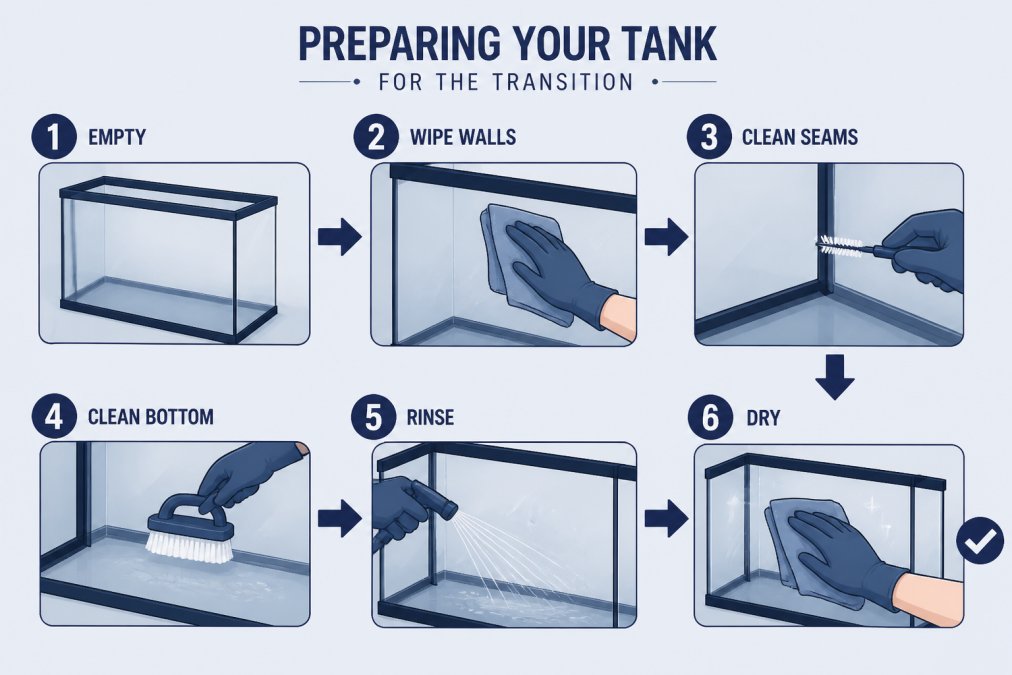
Phase 1: Planning and Equipment Audit (Week 1)
Checkpoint 1.1: Decide on Fish-Only vs. Reef Fish-only tanks tolerate wider ranges and cost less; reef tanks demand precision and high-output lighting. For first-time converters, fish-only is safer. Upgrade to reef later.
Checkpoint 1.2: Audit Your Equipment Using the equipment compatibility checklist above, identify what stays and what must be replaced. If uncertain about any component, assume it needs replacement.
Checkpoint 1.3: Plan Your Livestock Rehoming Your freshwater fish cannot survive saltwater conversion. Rehome them before starting; gradual salinity acclimation fails.
Phase 2: Tank Preparation and Equipment Installation (Week 2-3)
Checkpoint 2.1: Drain and Deep Clean Drain completely and scrub all surfaces with RO water, not tap water. Tap water contains chlorine and minerals that interfere with marine chemistry.
Checkpoint 2.2: Replace Substrate Remove all freshwater substrate. Use dry marine sand for fish-only or live sand for reef. Rinse dry sand until water runs clear; don't rinse live sand. Spread 2-4 inches evenly.
Checkpoint 2.3: Install New Equipment Install your saltwater-rated heater, pump, return system, and any new filter media. If you're using a sump, set it up now and test for leaks before adding water.
Checkpoint 2.4: Add Live Rock (Reef Only) If building a reef system, add live rock now. Live rock contains established bacteria colonies that accelerate cycling.
Phase 3: Water Mixing and Initial Fill (Week 3-4)
Checkpoint 3.1: Mix Saltwater Mix in a separate container with RO water. Add salt per brand instructions (typically 1 cup per 5 gallons). Stir until dissolved. Measure salinity with a refractometer; target 1.023-1.025 for fish-only, 1.025-1.026 for reef.
Checkpoint 3.2: Fill the Tank Pour the mixed saltwater into the tank slowly to avoid disturbing the substrate and live rock. Fill to the appropriate level for your overflow or return system.
Checkpoint 3.3: Verify Equipment Function Confirm that your heater is maintaining temperature (target 75-78°F), your return pump is circulating water, and your powerheads are creating flow throughout the tank. Check for leaks in the sump and around all fittings. Listen for unusual pump noises.
Phase 4: Cycling (Week 4-12)
Checkpoint 4.1: Establish the Nitrogen Cycle Your tank is now cycling. Beneficial bacteria are colonizing your substrate, filter media, and live rock. This process takes 4-8 weeks depending on whether you're using live rock or live sand. The cycle is complete when ammonia and nitrite both read 0 ppm for three consecutive days.
Checkpoint 4.2: Test Water Parameters Daily Test ammonia, nitrite, and nitrate daily. If ammonia or nitrite spike above 4 ppm, perform a 25% water change.
Checkpoint 4.3: Measure Salinity Twice Weekly Salinity should remain stable at 1.023-1.025. Top off with RO water only (not saltwater) to maintain level and salinity.
Checkpoint 4.4: Monitor Temperature and pH Temperature should stay between 75-78°F. pH should gradually stabilize around 8.1-8.3.
Phase 5: Livestock Introduction (Week 12+)
Checkpoint 5.1: Confirm Cycle Completion When ammonia and nitrite both read 0 ppm for three consecutive days, your cycle is complete. Nitrate will be present (typically 5-20 ppm); this is normal and expected.
63 Gallon All-in-One Reef Aquarium | Ultra-Clear Low-Iron Glass Tank →
Checkpoint 5.2: Choose Hardy Starter Fish Begin with hardy species: damselfish, clownfish, wrasses, or tangs. Avoid delicate species like seahorses or mandarin fish until you've maintained a stable system for 6+ months. Stock conservatively.
Checkpoint 5.3: Acclimate Livestock Properly Place the fish or coral in a quarantine container with a slow drip line from your main tank. Over 1-2 hours, the water gradually shifts to match your tank's parameters.
Checkpoint 5.4: Establish a Water Change Schedule Perform regular water changes. Use pre-mixed saltwater at the same salinity and temperature as your tank.
Conversion Timeline Summary
| Phase | Duration | Key Actions |
|---|---|---|
| Planning | Week 1 | Decide fish-only vs. reef; audit equipment; rehome freshwater fish |
| Preparation | Week 2-3 | Drain and clean; replace substrate; install equipment |
| Water Setup | Week 3-4 | Mix saltwater; fill tank; verify equipment |
| Cycling | Week 4-12 | Test daily; monitor ammonia, nitrite, salinity, pH |
| Livestock | Week 12+ | Introduce hardy fish; acclimate slowly; establish maintenance routine |
Total time to a stable, stocked saltwater tank: 12-16 weeks. Rushing this timeline is the primary cause of conversion failure. Patience and consistent testing are your best tools for success.
How Long to Cycle a Saltwater Tank
Understanding Saltwater Aquarium Cycling
A saltwater aquarium cycle establishes the beneficial bacterial colonies that process waste. This biological filtration is non-negotiable, introduce livestock before the cycle completes and you'll face ammonia and nitrite spikes that kill everything.
Saltwater cycling typically takes 4-8 weeks, depending on your approach. The process mirrors freshwater cycling: ammonia spikes first, then nitrite, then nitrate. But saltwater bacteria work at different rates than freshwater bacteria, and the salt itself affects bacterial growth.
Many aquarists use live rock or live sand to seed the cycle, these products contain established bacteria colonies that speed up the process. Without them, cycling takes longer. You can also use bottled bacterial cultures, though their effectiveness varies.
Water Parameters and Testing Schedule
Monitor these parameters throughout the cycling phase and beyond:
| Parameter | Target Range | Test Frequency |
|---|---|---|
| Ammonia | 0 ppm | Daily during cycle |
| Nitrite | 0 ppm | Daily during cycle |
| Nitrate | 5-20 ppm | Weekly after cycle |
| Salinity (Specific Gravity) | 1.023-1.025 | Twice weekly |
| pH | 8.1-8.3 | Weekly |
| Temperature | 75-78°F | Daily |
Test ammonia and nitrite daily while cycling. When both read 0 ppm for three consecutive days, your cycle is complete. Nitrate will be present; that's normal and expected.
Matching Saltwater Tank Salinity and Specific Gravity
Mixing Marine Salt and Measuring Salinity
Marine salt isn't table salt, it's a carefully formulated blend of minerals that replicates ocean chemistry. Mix it with RO water in a separate container before adding it to your tank. Never pour dry salt directly into the aquarium.
Always check your specific salt brand's instructions. Stir thoroughly for 10-15 minutes until fully dissolved. The solution should be clear with no undissolved particles.
Measure salinity using a refractometer. Hold a small sample up to natural light and read where the boundary line falls on the scale. Target 1.023-1.025 specific gravity for fish-only tanks. Reef tanks sometimes run slightly higher at 1.025-1.026, but this varies by coral species.
Acclimation and Water Changes
When you're ready to introduce your first fish or corals, acclimate them slowly. The acclimation process allows livestock to adjust to the new water chemistry gradually, preventing osmotic shock.
Place the fish or coral in a quarantine container with a slow drip line running from your main tank into the container. Over 1-2 hours, the water in the quarantine container gradually shifts to match your tank's parameters. Then gently release the animal into the main tank.
Perform 25% water changes every two weeks during the first month, then monthly thereafter. Water changes remove accumulated nitrate and replenish trace minerals that livestock consume. Use pre-mixed saltwater at the same salinity and temperature as your tank, never add cold freshwater or incorrectly mixed saltwater.
Livestock Compatibility and Transition Limits
Most freshwater fish won't survive saltwater conversion. Rehome your existing fish before converting; gradual salinity acclimation fails. Start with hardy marine fish: damselfish, clownfish, or wrasses. Stock conservatively and add fish gradually as your system matures.
Common Mistakes to Avoid During Conversion
Rushing the cycle is the biggest mistake. Clear water doesn't mean the cycle is complete, test daily and trust the numbers. Mix saltwater in RO water, not tap water. Skip acclimation and fish die. Neglect testing and you can't manage parameters. Invest in quality equipment upfront to prevent failures.
Converting from freshwater to saltwater is achievable, but it demands respect for marine chemistry and biology. The process takes time, patience, and proper equipment. AquaDreamUSA's complete saltwater systems, like our 63 Gallon All-in-One Reef Aquarium and 90 Gallon Coral Reef Aquarium, eliminate guesswork by including integrated sump filtration, proper circulation, and ceramic media, everything you need to establish a stable marine environment. SHOP NOW and start your saltwater journey with equipment engineered for success.


Frequently Asked Questions
Can I use my existing freshwater filter and equipment for a saltwater aquarium?
Most freshwater equipment can be adapted, but you'll need upgrades. Freshwater filters often lack the biological filtration capacity saltwater tanks demand. Protein skimmers, which are essential for saltwater systems, are rarely included in freshwater setups. Water pumps must handle saltwater's corrosive properties, many freshwater pumps corrode quickly. Ceramic media like our Premier Bio Ceramic Rings work in both systems, but you should inspect all equipment for rust and corrosion before converting.
How long does it take to cycle a saltwater tank?
Saltwater aquarium cycling typically takes 4 to 8 weeks, longer than freshwater cycling. The process depends on your cycling method. Fishless cycling with ammonia takes the full 8 weeks. Seeding with established saltwater media or live rock accelerates it to 3 to 4 weeks. You'll know cycling is complete when ammonia and nitrite drop to zero and nitrate stabilizes. Test water parameters every 2 to 3 days during cycling to track progress.
What salinity level should my saltwater tank maintain?
Most saltwater fish-only tanks maintain a specific gravity. Reef tanks require tighter control. Use a refractometer or hydrometer to measure specific gravity, not a simple floating device. Salinity drift stresses livestock and destabilizes water chemistry. Check salinity weekly and adjust as needed.
What happens if I move freshwater fish directly into saltwater?
Freshwater fish placed directly into saltwater will experience osmotic shock and die within hours. Their bodies lose water through their gills and skin, and they cannot regulate salt intake. Some species like mollies and guppies tolerate brackish water (low salinity), but true freshwater fish have no salt tolerance. Plan to rehome freshwater livestock or keep them in a separate system during your conversion.
Do I need to completely drain and clean my tank before converting to saltwater?
Yes. Freshwater residue, algae, and minerals damage saltwater chemistry. Drain the tank completely and scrub the glass, substrate, and decorations with freshwater only. Rinse thoroughly, soap and chemicals are toxic to marine life. Inspect equipment for rust or mineral buildup and clean with vinegar if needed. This thorough preparation prevents water quality crashes and livestock loss during the first weeks of your saltwater setup.
Can any freshwater tank be converted to saltwater, or are some better suited?
Most tanks can be converted, but larger tanks (55 gallons or more) are more forgiving. Saltwater systems require stable water chemistry; small tanks fluctuate quickly and stress livestock. Glass tanks work best, some acrylic tanks yellow under intense saltwater lighting. Check that your stand is waterproof and corrosion-resistant; saltwater is highly corrosive. All-in-one systems like our 63-gallon and 90-gallon reef aquariums are engineered for saltwater from the start and simplify the conversion process.