

 Acuarios y suministros

 Acuarios y suministros para arrecifes de coral

 Jardín, hidroponía y paisajismo

 Estanques, fuentes y cascadas

 Filtro de tambor para estanque

 Comunidad

 Centro de ayuda

5 Steps to Stabilize Reef Tank Alkalinity
Last Updated: October 26, 2026
Quick Summary
To stabilize reef tank alkalinity, test regularly at the same time daily, dose small corrections of no more than 1 dKH per 24 hours, and retest after 24 hours before adjusting again. Keeping alkalinity between 8-12 dKH prevents pH swings that stress and bleach corals.
- Ideal reef tank alkalinity range is 8-12 dKH according to Bulk Reef Supply guidelines
- Cap alkalinity corrections at roughly 1 dKH per 24 hours, or 0.5 dKH daily for tanks with sensitive stony corals
- Test at the same time each day to avoid confusion from natural daily fluctuations
- Wait 24 hours between doses and retest before making another adjustment
- Never make large corrections in one addition as this creates instability
Table of Contents
- Why Alkalinity Stability Matters in Reef Tanks
- Understanding Reef Tank Alkalinity Levels
- How Often to Test Reef Tank Alkalinity
- How to Raise Alkalinity in a Reef Tank
- How to Lower Alkalinity in a Reef Tank
- Troubleshooting Unstable Alkalinity Readings
- Building Your Alkalinity Monitoring System
- Frequently Asked Questions
Why Alkalinity Stability Matters in Reef Tanks
To stabilize reef tank alkalinity is the foundation of a healthy reef tank.
Corals consume alkalinity constantly as they build skeletons. When alkalinity drops, pH destabilizes; when pH swings, corals bleach and die. The fix: test regularly, dose carefully, adjust gradually.
Alkalinity, calcium, and magnesium work together, if one drifts, the others follow. Start with alkalinity because corals consume it first.
The ideal reef tank alkalinity range sits between 8-12 dKH according to Bulk Reef Supply's reef care guidelines. Stay within that window consistently, and your corals thrive. Miss it by even a few points and hold it there for a week, and you'll see stress.
Understanding Reef Tank Alkalinity Levels
Alkalinity measures your water's ability to resist pH changes. Also called carbonate hardness (KH), it's expressed in degrees of carbonate hardness (dKH) and acts as a buffer: the higher it is, the more stable your pH stays when acids enter the system.
Corals build skeletons from calcium carbonate, pulling alkalinity from the water as they grow. Heavy coral growth consumes alkalinity faster than light coverage, and 50 small corals behave differently from 5 large colonies.
How Often to Test Reef Tank Alkalinity
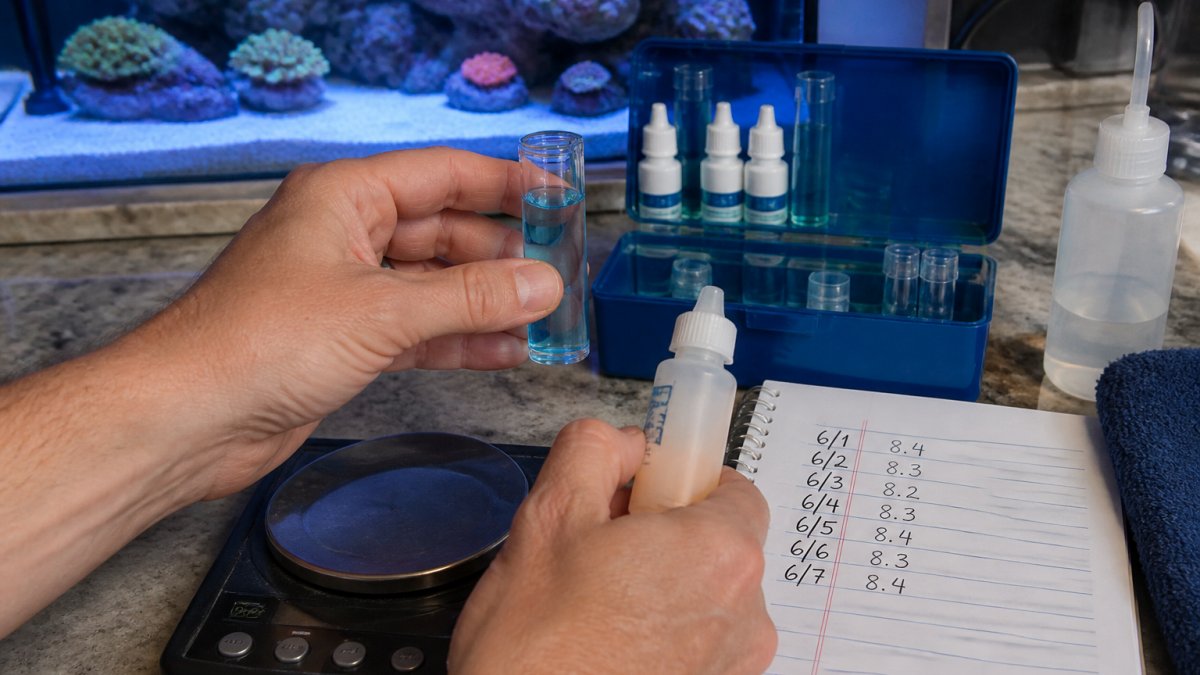
Test at the same time each day, morning or evening, pick one and stick with it. This removes confusion from natural daily fluctuations.
How to Raise Alkalinity in a Reef Tank
When alkalinity drops below your target, you need to raise it, but the dose matters more than the product. Never make a large correction in one addition. Large corrective additions create instability, and Riptide Aquaculture's alkalinity stabilization guide cautions against testing a value, deciding it's wrong, and making a large adjustment. The measured approach works better: calculate a small dose, add it, wait 24 hours, retest, and repeat.
A repeatable raise-and-retest workflow
- Test at your usual time with your usual kit. Record the reading and the time.
- Confirm the reading with a second sample from the same container if the result is surprising. A single odd number is a reason to retest, not to dose.
- Calculate the gap between your target and the measured value in dKH.
- Cap the correction at roughly 1 dKH per 24 hours. Many practitioners keep it to 0.5 dKH per day in tanks with sensitive stony corals.
- Dose the calculated amount in the evening, ideally into high flow.
- Retest 24 hours later at the same time of day and log the result.
- Repeat until you reach target, then switch from correction dosing to maintenance dosing that matches daily consumption.
Worked dose examples
Formula: gallons of system volume × desired dKH rise × (product volume per 1 dKH per gallon) = dose.
Safety limits
- Per-correction ceiling: about 1 dKH per 24 hours; 0.5 dKH per day for tanks with acropora or other sensitive stony corals.
- Per-addition ceiling: split anything above roughly 0.5 dKH into multiple additions spaced at least 6-12 hours apart.
- Overshoot check: if a retest shows you landed more than 0.5 dKH above target, stop dosing and let consumption bring it down rather than correcting downward immediately.
- Never chase a single reading. Two consecutive tests showing the same trend are the signal to act.
The three methods for raising alkalinity
You can find alkalinity supplements at reef tank supplies coral reef aquarium essentials. Stock up on your preferred brand so you don't run out mid-correction.
Follow these safety limits when correcting alkalinity to avoid stressing your corals.
| Limit Type | Maximum Amount | Notes |
|---|---|---|
| Per-correction ceiling | 1 dKH per 24 hours | 0.5 dKH per day for sensitive stony corals |
| Per-addition ceiling | 0.5 dKH | Split larger amounts into multiple doses |
| Spacing between additions | 6-12 hours apart | For doses above 0.5 dKH |
| Overshoot tolerance | 0.5 dKH above target | Stop dosing and let consumption bring it down |
How to Lower Alkalinity in a Reef Tank
Never use acidic compounds to lower alkalinity quickly, that crashes pH and stresses corals. Dilution is slower but keeps your tank stable.
Troubleshooting Unstable Alkalinity Readings
Your alkalinity swings wildly? Before you dose, rule out that nothing is wrong with the water at all, a large share of apparent swings are measurement artifacts. Work through the checks below in order; each is cheaper and faster than the next.
Step 1: Verify the reading before you react
- Sample at the same time daily. Alkalinity naturally dips and recovers over the photoperiod. Comparing a morning test to an evening test creates a swing that isn't real.
Step 2: Check salinity and top-off
Alkalinity is expressed per volume of water, so salinity changes move the number even when total carbonate hasn't. Verify salinity with a calibrated refractometer: topping off with saltwater instead of fresh water pushes alkalinity up; over-dilution pulls it down. Confirm your auto top-off delivers fresh RO water, not saltwater.
Step 3: Check the source water
Test your top-off water and freshly mixed saltwater for alkalinity. If source water reads above target, every top-off quietly adds alkalinity and causes a slow creep, switch to RO water. Also test a fresh batch of salt mix; a bad batch or mixing error turns every water change into a swing.
Step 4: Check the dosing equipment
- Doser calibration: run the pump into a measuring cup for a known time and confirm it delivers the programmed volume. A drifting pump silently changes your dose.
- Clogged lines and air bubbles: a partially blocked line delivers less than programmed; a siphon can deliver more.
- Timer and schedule errors: confirm the doser is actually running when you think it is.
- Kalkwasser delivery: a kalk stirrer or top-off line that drips faster on some days than others will produce uneven additions.
Step 5: Match the symptom to the cause
Alkalinity drops faster than expected:
Alkalinity climbs instead of dropping:
Alkalinity is stable but at the wrong level:
Wild swings between tests:
Building Your Alkalinity Monitoring System
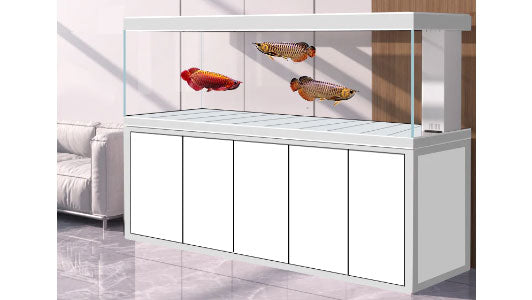
Set up a complete system with complete reef ready saltwater fish tank aquarium system with integrated sump. A quality tank with proper equipment makes alkalinity management easier because your water volume is stable and your circulation is consistent.
Frequently Asked Questions
What is the ideal alkalinity level for a reef tank?
Most reef tanks thrive with alkalinity between 8-12 dKH (degrees of carbonate hardness). This range supports coral growth and maintains stable pH. Consistent daily readings matter more than hitting a single number; aim for stability within your chosen range rather than chasing a perfect value. Daily testing helps you spot consumption patterns and adjust dosing before swings occur.
How often should I test alkalinity in my reef tank?
Test alkalinity daily during the first month of establishing stability, then at least three times per week once you identify your tank's consumption rate. Daily testing reveals how much alkalinity your corals consume and whether your dosing is keeping pace. Once your readings stay stable for two weeks, you can reduce to twice-weekly checks, but return to daily testing if you notice drift.
Can I raise alkalinity too quickly?
Yes. Large corrective additions create water chemistry instability and stress corals. Avoid testing, deciding a value is wrong, and making a large adjustment in one dose. Instead, calculate the amount needed to raise alkalinity by 0.5-1 dKH per day, then divide that dose across two smaller additions 12 hours apart. Gradual correction prevents parameter swings that trigger coral stress.
What is the relationship between alkalinity, calcium, and magnesium?
Alkalinity (carbonate hardness), calcium, and magnesium work together to support coral skeleton growth and maintain pH stability. Corals consume all three as they build. Testing and dosing alkalinity alone is incomplete; you must also monitor calcium and magnesium levels. Many reef keepers use two-part or three-part dosing systems to replenish all three parameters in balance, preventing deficiencies that slow coral growth.
Stabilizing reef tank alkalinity takes consistency, not complexity. Test daily, dose small amounts, and record your results. After a few weeks, you'll understand your tank's rhythm and the work becomes routine. The corals reward you with growth and color. That's when you know you've got it right.