

 Acuarios y suministros

 Acuarios y suministros para arrecifes de coral

 Jardín, hidroponía y paisajismo

 Estanques, fuentes y cascadas
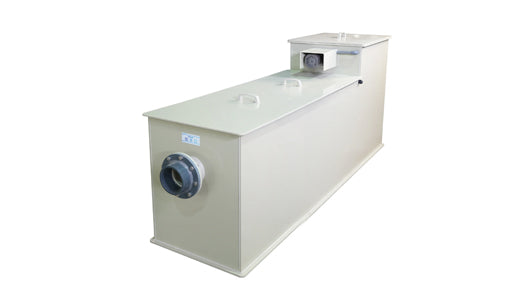

 Filtro de tambor para estanque

 Comunidad

 Centro de ayuda

High Performance Pond Filtration Systems 2026
Table of Contents
- Complete Pond Filtration System Recommendations
- Best Pond Filter Systems 2026 by Capacity
- Pond Filter Sizing by Gallons and Fish Load
- Mechanical Filtration and Biological Filtration
- UV Clarifier for Ponds and Algae Control
- Pond Filter Maintenance and Seasonal Operation
- Total Cost of Ownership and Performance Value
- Which System Should You Pick?
- Frequently Asked Questions
Last Updated: October 21, 2026
Complete Pond Filtration System Recommendations
Choosing the right high performance pond filtration systems for 2026 depends on three factors: pond volume, fish load, and whether you prioritize automatic maintenance or manual management.
A complete pond filtration system combines three stages: mechanical filtration to capture solid waste, biological filtration to establish beneficial bacteria colonies, and UV sterilization to control algae and pathogens. The best systems integrate all three into one unit, eliminating separate plumbing.
At AquaDreamUSA, we've spent over two decades helping pond owners and aquaculture professionals select systems that deliver crystal-clear water without constant intervention. Here's what separates the systems worth your investment from the rest.
Feature Comparison Table
| System | Pond Capacity | Flow Rate | UV Sterilization | Best For | Starting Price |
|---|---|---|---|---|---|
| BTS-10 | 2,500 gallons | 2,690 GPH | 20W | Small to mid-size koi ponds | $2,699.00 |
| T30 | 7,194 gallons | 8,070 GPH | None | Large koi ponds, semi-commercial | $3,999.99 |
| Bakki Shower | 14,400 gallons | 16,100 GPH | None | Gravity-fed trickle filtration | $3,269.00 |
| BTS30 | 8,000 gallons | 8,070 GPH | 30W dual | Professional aquaculture farms | $4,599.99 |
| TS80 | 19,160 gallons | 21,500 GPH | None | Large commercial operations | $6,099.00 |
| BTS50 | 12,000 gallons | 13,450 GPH | 40W dual | High-density koi environments | $7,999.99 |
| T300 | 71,850 gallons | 80,700 GPH | Integrated | Industrial-scale operations | $10,999.00 |
How We Evaluated These Systems
We focused on real-world criteria: mechanical filtration efficiency, biological filtration capacity, automatic versus manual operation, and five-year total cost of ownership. Each system was assessed on handling its stated fish load without daily maintenance.

Mechanical performance was measured by particle capture size (most use 50-micron screens) and clog prevention. Biological capacity reflects biochemical chamber volume and how quickly bacteria establish stable nitrification cycles. Automatic backwash eliminates hands-on cleaning; gravity-fed systems require periodic manual intervention.
Best Pond Filter Systems 2026 by Capacity
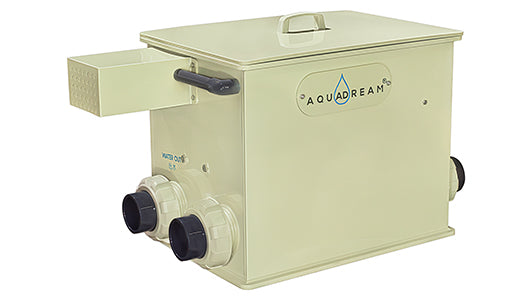
Small to Mid-Size Ponds: BTS-10 Automatic Drum Micro Filter
The BTS-10 bridges hobbyist and professional equipment.
Intelligent water-level control triggers backwash automatically when the screen accumulates debris, so there's no timer or cleaning to remember. The integrated UV20W sterilizer handles algae and pathogens simultaneously, and food-grade PP construction withstands sun and temperature swings for 10+ years.
The trade-off is capacity: above 2,500 gallons or with high stocking density, performance drops. For smaller ponds or koi beginners, it delivers professional results without the commercial price tag.
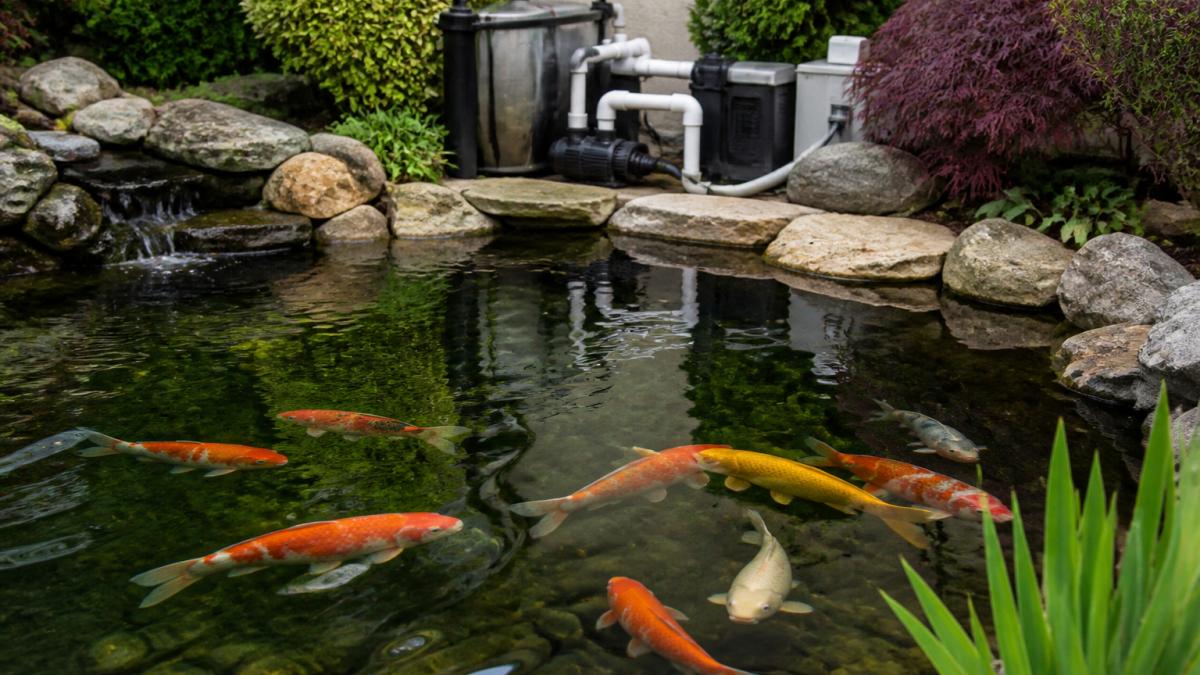
Large Koi Ponds: BTS30 and T30 Drum Filters
For ponds between 7,000 and 8,000 gallons, the choice comes down to integrated UV.
Both use 316 stainless steel drum screens and automatic high-pressure backwash. The BTS30's dual UV sterilizers provide twice the pathogen-neutralizing power of single-lamp systems, making it smarter for high-density koi collections. The T30 works equally well if UV is handled separately, and costs less.
The biochemical filtration chamber on both units rapidly cultivates nitrifying bacteria, which convert toxic ammonia and nitrite into less harmful nitrate. A larger chamber means a more stable cycle that tolerates feeding spikes and temporary overcrowding.
Commercial and High-Density Ponds: BTS50 and TS80
For aquaculture operations or professional display ponds with 50+ koi, the BTS50 handles 12,000 gallons at 13,450 GPH with dual UV40W sterilization and dual DN100 (4-inch) inlets.
The TS80 offers more flow capacity, 21,500 GPH through a 19,160-gallon pond, at a lower price than the BTS50. It omits UV sterilization, fine if you use a separate clarifier or other algae-control methods.
Both include inclined-bottom designs that eliminate dead zones where debris accumulates. The automatic backwash flushes impurities directly to a sewage outlet, with no manual scooping or cartridge replacement, hands-free maintenance worth the premium for commercial operations.
Alternative Approach: Bakki Shower Trickle Filter
The Bakki Shower takes a different approach: gravity-fed trickle filtration instead of drum-based mechanical filtration. Water is pumped to the top, then drips through layered media (cotton, biochemical balls, glass rings) before returning to the pond, maximizing the air contact aerobic bacteria need.
The Bakki Shower works for ponds up to 14,400 gallons at 16,100 GPH, excelling at biological filtration and oxygenation since the drip action significantly increases dissolved oxygen. The trade-off is manual maintenance: you'll periodically clean or replace media as it accumulates sediment. It suits operators who prefer hands-on control or have space constraints that make drum filters impractical.
Pond Filter Sizing by Gallons and Fish Load
Correct sizing prevents cloudy water and ammonia spikes. The professional rule is turnover rate: process the entire pond volume at least once every 3-4 hours. For a 5,000-gallon pond, that means a filter handling at least 1,250-1,667 GPH.
Fish load complicates this.
Use this framework: multiply your pond volume by 1.5 to account for fish waste and feeding. If you have 3,000 gallons with moderate stocking, target a system handling 4,500+ GPH. If stocking is heavy, aim for 6,000+ GPH.
Mechanical Filtration and Biological Filtration
Mechanical filtration captures solid waste before it breaks down into ammonia. All the systems we recommend use drum or trickle media to intercept suspended particles at 50 microns or smaller, keeping water clear and preventing sludge buildup on the pond floor.
Biological filtration is where beneficial bacteria convert toxic nitrogen compounds into less harmful forms. The bacteria need surface area to colonize (media, rocks, or biochemical chambers) and oxygen to function.
The best systems combine both stages in one unit: mechanical filtration removes sediment that would clog biological media, and the biological stage handles ammonia that mechanical filtration alone cannot. That's why integrated drum filters outperform single-stage systems, handling both jobs without separate equipment.

UV Clarifier for Ponds and Algae Control
UV sterilization works by exposing water to ultraviolet light as it flows through a chamber. The UV penetrates algae cells and bacteria, disrupting their DNA and preventing reproduction. Free-floating algae dies, water clears, and pathogens are neutralized, all without chemicals.
How UV Sterilization Works
UV light at 254 nanometers (UV-C) is lethal to algae and bacteria but harmless to fish and plants at pond-system concentrations. As water passes through the chamber, suspended algae cells absorb the light energy, damaging their genetic material and preventing reproduction. Bacteria and viruses are similarly affected.
The effectiveness depends on flow rate and UV lamp wattage. A 20W lamp handles algae control in smaller systems. A 40W dual-lamp setup provides twice the sterilization power and is better for high-density ponds or systems prone to green water.
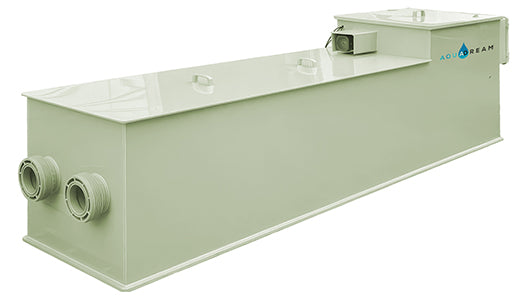
Koi Pond Macro Drum Filtration System Filters Ponds Up To 71,850 Gallons →
Integrated UV vs. Standalone Units
The BTS30 and BTS50 include integrated UV sterilization, with the UV chamber part of the main filter unit. Water flows through mechanical filtration, then biological filtration, then past the UV lamps before returning to the pond, an efficient design that reduces plumbing complexity.
Standalone UV clarifiers connect to your existing pump and filtration system. The Aqua Dream UV-400 is a high-capacity standalone unit with 400 watts of UV power, ideal for retrofitting commercial or large-scale operations.

Choose integrated UV if you're buying a new system and want all-in-one simplicity. Choose standalone UV if you're adding algae control to an existing setup or need more UV power than your filter provides.
Pond Filter Maintenance and Seasonal Operation
Automatic Backwash and Self-Cleaning Systems
The drum filters we recommend (BTS and T series) feature automatic backwash triggered by water-level sensors. When the screen accumulates debris, a high-pressure rinse cycle rotates the drum and flushes impurities into a sewage outlet, all without your intervention.
Maintenance is minimal: inspect nozzles quarterly and check electrical connections before winter. No cartridge replacement or manual media scrubbing. For most operators, this hands-free operation is the biggest advantage over gravity-fed systems.
Winter Shutdown and Year-Round Care
In cold climates, shut down your system when water temperature drops below 50°F. Koi and other coldwater fish enter dormancy and produce minimal waste. Continuing to run filtration wastes energy and stresses equipment exposed to freezing temperatures.
Before shutdown, drain the system completely. Residual water can freeze inside pipes and damage the pump. Store filter media in a dry location. In spring, rinse all components before restarting.
Year-round operation is necessary only in mild climates or if you're maintaining tropical systems. Even then, reduce flow rates in winter to match the lower biological activity of cooler water.
Total Cost of Ownership and Performance Value
The cheapest system upfront isn't always the best value. Consider five-year costs: equipment price, electricity consumption, replacement parts, and maintenance time.
A BTS-10 at $2,699 costs less initially than a BTS30 at $4,599.99, but if your pond grows beyond 2,500 gallons, you'll replace it sooner.
Electricity consumption varies by motor power. The BTS-10 uses a 60W motor; the BTS50 uses a 120W motor.
Replacement parts (UV lamps, nozzles, gaskets) are inexpensive and available from AquaDreamUSA.
Calculate your total cost by adding equipment price, estimated electricity costs, and maintenance labor.
Which System Should You Pick?
Start by measuring your pond volume and counting your fish. A 3,000-gallon pond with 8-10 koi needs different equipment than a 10,000-gallon commercial display.
For small hobbyist ponds under 3,000 gallons, the BTS-10 delivers professional filtration at a reasonable cost. It's reliable, automatic, and includes UV sterilization.
For serious koi hobbyists with 7,000-8,000 gallon ponds, the BTS30 is our top recommendation.
For commercial operations and high-density ponds, the BTS50 or TS80 handles the volume and fish load without compromise.
The Bakki Shower trickle filter is best for operators who prefer gravity-fed design or have space constraints.
Keeping a pond clear and healthy requires the right filtration foundation. Shop our complete selection of drum filters, UV sterilizers, and pumps to build the system that fits your needs. EPA guidance on aquaculture water quality standards
Frequently Asked Questions
What is the best filtration system for a pond?
The best pond filtration system depends on your pond size, fish load, and maintenance preferences. High-performance drum filters like the BTS-10 (2,500 gallons), BTS30 (8,000+ gallons), and BTS50 (12,000 gallons) combine mechanical filtration, biological filtration, and UV sterilization in one integrated unit. For smaller ponds or those preferring gravity-fed systems, the Bakki Shower Trickle Filter offers excellent biological filtration at 16,100 GPH. All AquaDreamUSA systems feature automatic backwash, eliminating hands-on maintenance while maintaining crystal-clear water.
How do I choose a pond filter by gallon capacity?
Match your pond's volume to the filter's rated capacity, then account for fish load and feeding rates. A 2,500-gallon pond with moderate koi stocking works well with the BTS-10 at 2,690 GPH. A 7,194-gallon pond needs the T30 or BTS30 (8,070 GPH). For 12,000+ gallons with high-density stocking, choose the BTS50 (13,450 GPH) or TS80 (21,500 GPH). Heavy-feeding koi collections should size up one model to ensure adequate turnover and waste removal.
Do pond filters need a UV clarifier for ponds?
UV clarification is not strictly required but significantly improves water clarity and reduces disease transmission. Many AquaDreamUSA drum filters (BTS-10, BTS30, BTS50) include integrated UV sterilizers rated 20W to 40W. For standalone UV treatment, the Aqua Dream UV-400 with 400 watts of power neutralizes algae spores and pathogens without chemicals. UV works best paired with mechanical and biological filtration, it clarifies water but does not remove organic waste.
How often should I clean a pond filter?
AquaDreamUSA's automatic drum filters self-clean via intelligent water-level triggered backwash cycles, no manual intervention needed. The system detects debris accumulation and automatically flushes impurities to the sewage outlet. For gravity-fed trickle filters like the Bakki Shower, inspect filter media monthly and rinse with pond water (not tap water) to preserve beneficial bacteria. During spring startup and fall shutdown, perform a full system inspection and clean intake nozzles to prevent blockages.
What is the difference between mechanical and biological filtration?
Mechanical filtration captures physical waste: fish feces, uneaten food, and suspended particles using filter screens (typically ≥50 μm). Biological filtration establishes beneficial nitrifying bacteria colonies that break down ammonia and nitrite into less toxic nitrate. AquaDreamUSA's drum filters and trickle filters integrate both stages: the 316 stainless steel screen handles mechanical removal, while the biochemical chamber cultivates bacteria for long-term water stability. Together, they maintain crystal-clear, healthy pond water.