

 Aquariums & Supplies
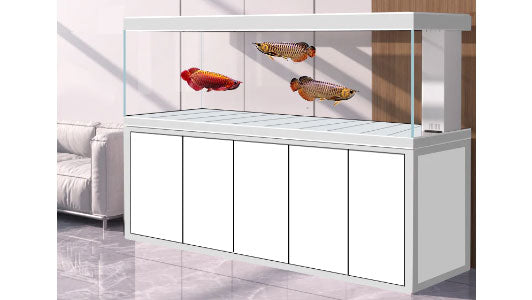

 Coral Reef Aquariums & Supplies
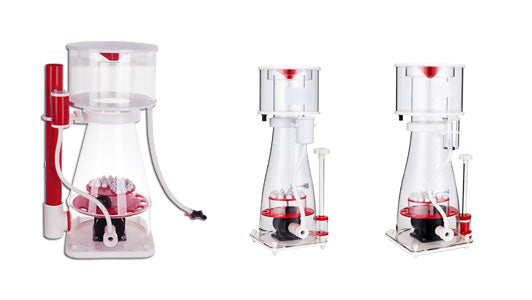

 Garden & Hydroponics & Landscape
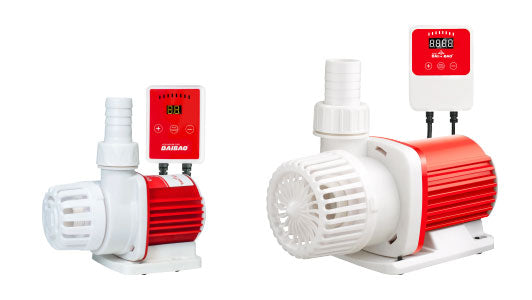

 Ponds & Fountains & Waterfalls
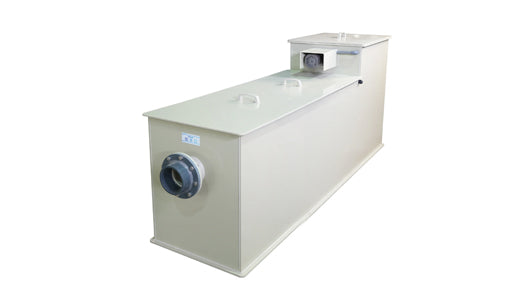

 Drum Pond Filter

 Community

 Help Center

What Size Saltwater Tank Is Best for a Beginner?
Last Updated: November 5, 2026
Quick Summary
The best saltwater tank size for beginners is 40 gallons, with industry guidance putting the practical range at 32 to 50 gallons. That volume buffers fish waste and holds salinity and temperature steadier between water changes, so small mistakes do not swing the whole system.
- A 40-gallon breeder is wide and shallow, giving a large footprint for aquascaping without a tall glass wall.
- A 20-gallon long is the smallest freshwater tank we would convert into a primary display.
- A 10-gallon tank works well as a quarantine or observation tank alongside your main display.
- A 40-gallon tank with a 10 percent weekly change uses roughly 4 gallons of saltwater per week.
- Plan to replace the filter, the light, and possibly the heater when converting a freshwater tank.
Table of Contents
- Best Saltwater Tank Size for Beginners: The Short Answer
- Why 40 Gallons Is the Practical Floor
- Saltwater Fish Tank Size Chart: Gallons, Dimensions, and What They Suit
- Freshwater Tank Conversion to Saltwater: What Your Old Tank Can Handle
- 10-Gallon Saltwater Aquarium Setup: What It Really Takes
- Tank Dimensions, Footprint, and Usable Swimming Space
- Setup Cost and Total Cost of Ownership by Tank Size
- Choosing Your Tank Size at AquaDreamUSA
- Frequently Asked Questions
Best Saltwater Tank Size for Beginners: The Short Answer
The best saltwater tank size for beginners is 40 gallons. Industry guidance puts the practical range at 32 to 50 gallons, with 60 to 75 gallons described as the best balance of stability and cost (Aquarium Specialty beginner tank buyer's guide).
Finding the right saltwater aquarium size for beginner conversion matters because your tank choice sets your whole budget, your stocking plan, and how much time you spend with a test kit.
Below, we break down every size from 10 to 180 gallons, explain what your old freshwater tank can handle, and show you how to pick a volume you will still enjoy a year from now.
If you want to skip the theory, browse beginner fish tanks and easy starter aquariums built around beginner-friendly sizes.
Why 40 Gallons Is the Practical Floor
Forty gallons is the practical floor because water volume buffers waste and evaporation.
The 40-gallon breeder is one of the most popular first reef tanks, and its dimensions explain why.
We would not call 40 gallons magic. It is simply the smallest volume where parameter stability stops being a daily worry for most new reef keepers.
A common mistake is buying a 10-gallon tank to "learn the basics cheaply." You end up spending more on test kits and replacement livestock than you saved on glass.
Saltwater Fish Tank Size Chart: Gallons, Dimensions, and What They Suit
Here is a quick reference for how common sizes behave in a beginner setup:
| Tank Size | Typical Footprint | Best For | Main Trade-Off |
|---|---|---|---|
| 10 gallon | Small desktop | Fish-only quarantine | Fast parameter swings |
| 20-gallon long | Long, shallow | Nano reef, soft corals | Limited fish choices |
| 40-gallon breeder | Wide, shallow | Best all-round beginner tank | Needs a real stand |
| 60-gallon cube | Square footprint | Reef tank with corals | Taller reach for cleaning |
| 90 gallon | Large footprint | Mixed reef, showpiece | Higher equipment cost |
| 120 gallon | Very large | Fish-only with big species | Heavy floor load |
| 180 gallon | Room-scale | Advanced reef builds | Structural planning needed |
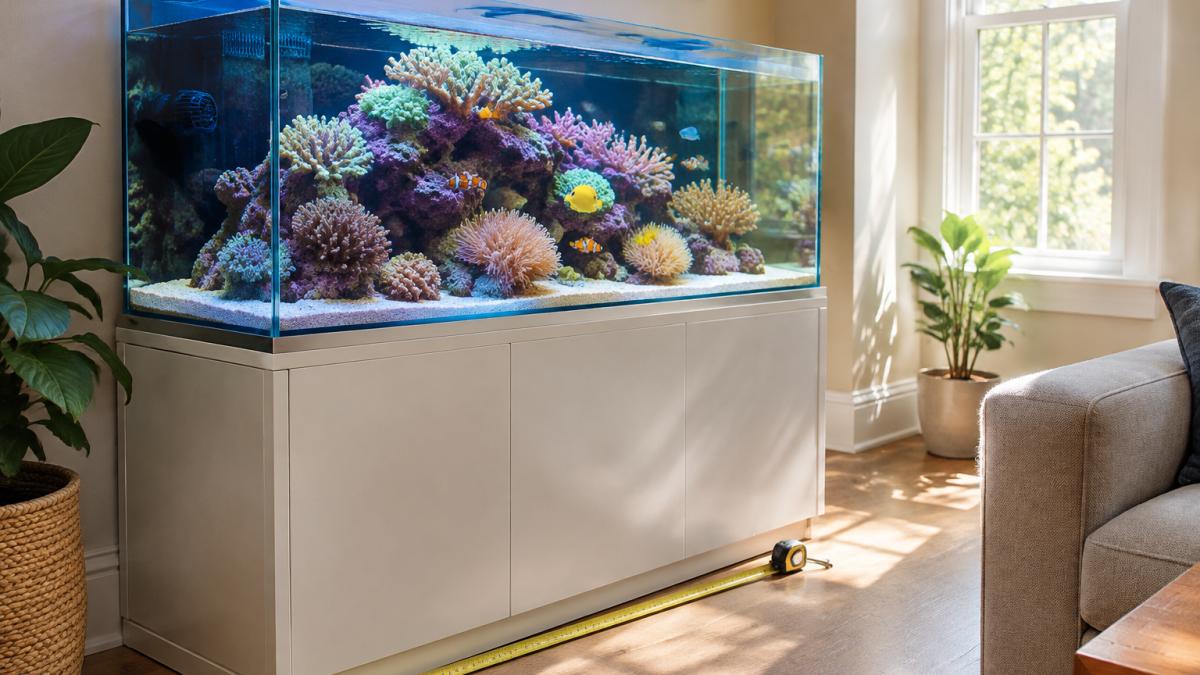
A 20-gallon long gives you surface area for gas exchange with a short reach for cleaning. A 60-gallon cube looks dramatic but forces you to work around a deep tank. Match the shape to how you will actually maintain it.
If you are still comparing footprints, our fish tank dimensions and size guide lists measurements for every common configuration.
Freshwater Tank Conversion to Saltwater: What Your Old Tank Can Handle
You can convert a freshwater tank to saltwater, but the tank's size, materials, and condition decide whether the conversion is worth doing. Most guides treat conversion as a yes-or-no question about metal parts.
Start with the tank itself. Glass or acrylic is fine; the failure points are the frame, stand, and any plumbing that contains iron or steel. Reef Builders notes that rust-prone metal components are the exception that rules a conversion out (Reef Builders on freshwater to saltwater conversion).
Size-Specific Conversion Checks
Use the tank's volume to decide what kind of saltwater system it can become:
- 10 to 20 gallons: converts to a nano reef or fish-only quarantine tank. Expect daily attention to salinity and temperature. A 20-gallon long is the smallest freshwater tank we would convert into a primary display.
- 29 to 39 gallons: workable for a fish-only or soft-coral setup, but you will want a hang-on-back skimmer and a tight lid to limit evaporation. Check that the stand can handle the added weight of rock and saltwater.
- 40 to 55 gallons: the sweet spot for conversion. A 40-gallon breeder's wide footprint suits aquascaping, and a 55-gallon gives you enough volume to buffer parameter swings. These sizes usually have room for a sump below or beside the tank.
- 75 gallons and up: converts into a stable mixed-reef system, but confirm the floor can carry the loaded weight and that the stand is rated for it. Large freshwater tanks often came with stands built for freshwater weight, which is lighter than saltwater plus rock plus sand.
Material and Condition Checks
Run through this list before you add salt:
- No iron or steel parts anywhere in the frame, stand, or plumbing
- Glass has no deep scratches or chips near the seams; silicone is intact and not peeling
- The stand holds the filled weight without flexing; add a leveling mat if the floor is uneven
- Old filter media, gravel, and decorations are removed, not reused
- The tank has room for a sump or a hang-on skimmer, or you have a plan for a sumpless setup
- You have a plan for mixing saltwater and a source of RO/DI water before the first fill
Watch out: reusing old freshwater filter media or gravel in a saltwater tank can seed the wrong bacteria and foul the water. Start with fresh media and let the tank cycle properly.
Equipment You Will Likely Replace
Most freshwater equipment does not carry over cleanly. Hang-on-back filters built for freshwater often lack the flow and media capacity for a reef. Freshwater lights usually lack the spectrum and intensity corals need. Heaters may be undersized once you account for saltwater's higher density and the rock mass. Plan to replace the filter, the light, and possibly the heater; keep the tank, stand, and any glass lids that fit.
For a full walkthrough, read our guide on how to transition from freshwater to saltwater.
10-Gallon Saltwater Aquarium Setup: What It Really Takes
A 10-gallon saltwater aquarium setup is possible, but it is a high-attention project. One video creator reported moving from a 10-gallon tank to a 40-gallon tank within weeks, then choosing not to go larger (The Best Size Saltwater Aquarium For Beginners).
Aqua Dream Coral Reef Aquarium Tempered Glass Fish Tank 90 Gallon Complete Set →
Small volume means small mistakes become big problems. Evaporation raises salinity quickly. A single missed feeding can spike ammonia. You will test water more often than a 40-gallon owner does.
That said, a 10-gallon tank works well as a quarantine or observation tank. Keep one running alongside your main display and you will thank yourself when a new fish needs watching.
If you are space-limited, a 20-gallon long is the smallest tank we would recommend as a primary display.
Tank Dimensions, Footprint, and Usable Swimming Space
Dimensions matter more than gallon count for two reasons: floor space and swimming room. A tall 30-gallon tank and a wide 40-gallon breeder hold similar water but behave very differently.
Usable swimming space is what your fish actually get. Tangs and other active swimmers need horizontal run, not height.
Weight is the other number people forget. Water is heavy, and a filled 90-gallon system plus stand and rock can stress a wooden floor. Check the load before you commit to a large tank.
We group beginner tanks into three footprint types:
- Long and shallow: best for nano reefs and active fish
- Cube: good for corals, awkward for cleaning
- Standard rectangle: easiest to equip and resell
Setup Cost and Total Cost of Ownership by Tank Size
Cost scales faster than gallon count. A bigger tank needs a bigger pump, more live rock, more salt, and more light. The upfront price is only part of the picture, and the recurring costs are where small tanks surprise beginners.
Startup Cost by Size
A 10-gallon nano setup is the cheapest to buy and the most expensive to run per gallon. You can assemble one for a few hundred dollars, but you will likely upgrade the light, the flow pump, and the top-off system within a year.
All-in-one systems change the math. They bundle the pump, sump, skimmer, and light, so you are not guessing at compatibility or buying parts twice.
Recurring Cost Buckets
Ongoing cost breaks into four buckets:
- Salt mix: scales with water volume and water-change frequency. A 40-gallon tank with a 10 percent weekly change uses roughly 4 gallons of saltwater per week; a 90-gallon tank uses about 9 gallons.
- Electricity: pumps, heaters, and lights run continuously. Larger tanks use more, but the difference is often smaller than beginners expect because lighting and heating are the dominant loads.
- Replacement media and consumables: filter socks, carbon, test kits, and RO/DI filters. These scale with maintenance frequency more than with tank size.
- Livestock: the largest variable. A larger tank supports more fish and corals, and the cost of stocking scales with volume and compatibility.
The Trade-Off That Favors Larger Tanks
A larger tank uses more salt, more electricity, and more media, but it also loses fewer fish to parameter swings.
Our aquarium specifications finder lets you filter tanks by size and features so you can compare complete setups side by side.
Choosing Your Tank Size at AquaDreamUSA
Picking a tank size comes down to three questions: how much space you have, how much maintenance you want, and what you plan to keep. Answer those honestly and the gallon count picks itself.
We stock complete systems. The 37-gallon Coral Reef Aquarium includes a built-in 13-gallon sump, a prebuilt cabinet, and all the plumbing you need. The 50-gallon Reef Tank includes a 17-gallon sump and a protein skimmer section.


For a larger display, the 90-gallon Coral Reef Aquarium ships with a 32-gallon sump, a return pump, and a filter sock unit. Our complete saltwater fish tank setups pair each tank with the equipment it needs.

Frequently Asked Questions
What size saltwater tank should a beginner get?
Beginner guidance generally points to tanks of roughly 32 to 50 gallons as a sensible minimum. A 40-gallon breeder is one of the most popular first reef tanks because its dimensions leave room for aquascaping without a large footprint. Anything under 20 gallons swings faster in salinity and temperature, so it demands more frequent testing and top-offs.
Can I convert my freshwater aquarium to saltwater?
Yes, in most cases. The tank itself usually works, but any component that can rust, such as iron or steel parts, has to go before saltwater goes in. You will also need a protein skimmer, a source of saltwater, and a way to keep salinity stable. Size matters here: a converted 55-gallon tank has more margin for error than a converted 10-gallon, which can shift salinity within hours of evaporation.
Is a small saltwater tank harder to maintain than a larger one?
Smaller tanks are harder in one specific way: water parameters move faster. A 10-gallon loses a larger share of its volume to evaporation, so salinity climbs quickly and temperature tracks room conditions. Larger tanks dilute the same waste and top-off errors across more water. A 40 to 60-gallon tank gives a beginner more time to react, which is why many guides recommend starting there rather than with a nano tank.
How many fish can a beginner keep in a saltwater aquarium?
Stocking depends on adult fish size and swimming space, not just gallon count. A 40-gallon breeder can support a small community such as a pair of clownfish plus a goby, while a 10-gallon limits you to one small fish at most. Plan around the adult size of each fish and leave room for live rock, which takes up volume. Add fish slowly so the bio-filter keeps up with the load.
Choosing a tank size is the one decision that shapes everything after it. Get the volume right and the hobby feels manageable; get it wrong and every water change becomes a battle. AquaDreamUSA builds complete systems with the sump, pump, and skimmer already matched to the tank, so you can focus on livestock instead of plumbing. Get started with AquaDreamUSA and set up a saltwater tank that stays stable from the first fill.