

 Aquariums & Supplies

 Coral Reef Aquariums & Supplies

 Garden & Hydroponics & Landscape

 Ponds & Fountains & Waterfalls

 Drum Pond Filter

 Community

 Help Center

How Do You Keep pH Stable in a Saltwater Tank?
Last Updated: October 28, 2026
Quick Summary
To keep saltwater tank pH stable, aim for 8.0 to 8.4 and accept 7.8 to 8.5 as normal daily movement, judging the trend rather than a single reading. Fix excess CO2 with better gas exchange and dose for alkalinity, not a pH number, since a stable 7.9 beats a swinging 8.3.
- pH bottoms out just before lights-on, so a 7.8 at 6 a.m. climbing to 8.2 by afternoon is normal.
- Calibrate a digital pH meter every two to four weeks using fresh two-point solutions.
- If your kit and meter disagree by more than about 0.2, trust the kit and recalibrate the meter.
- Never raise pH more than about 0.2 points in 24 hours, and change one variable at a time.
- Give gas-exchange changes 24 to 48 hours before judging them, since this corrects most low-pH tanks.
Table of Contents
- What Is the Ideal pH for a Reef Tank?
- Causes of Low pH in a Reef Tank: A Diagnostic Walkthrough
- Reef Tank pH Testing: Meters, Kits, and Calibration
- Reading Daily pH Fluctuation and Trends
- How to Raise pH in a Saltwater Aquarium Safely
- How pH Interacts With Alkalinity, Calcium, and Dosing
- When Not to Intervene: Risks of Chasing a Number
- Equipping Your System for Stable Saltwater Tank pH
- Frequently Asked Questions
What Is the Ideal pH for a Reef Tank?
The ideal pH for a reef tank is usually cited as 8.0 to 8.4, though plenty of healthy reefs run fine between 7.8 and 8.5. That range is wider than most guides admit, and it matters: chasing a single number causes more problems than it solves.
The pH scale measures how acidic or alkaline water is (usgs.gov). In a saltwater aquarium, pH sits near the top of that scale because seawater is naturally alkaline. Corals, fish, and invertebrates all evolved in that narrow band.
A stable 7.9 beats a swinging 8.3 every time. Corals build their skeletons through calcification, and calcification slows when pH drops, but the swing itself stresses animals more than the number does.
So the practical target:
- Aim for 8.0 to 8.4 as your working range
- Accept 7.8 to 8.5 as normal daily movement
- Judge the trend, not the reading on any single day
One caution. Published recommendations genuinely disagree, and the sources that cite 8.0 to 8.4 and those reporting success from 7.8 to 8.5 are both describing working tanks. Pick a range, hold it steady, and stop comparing your tank to someone else's screenshot.
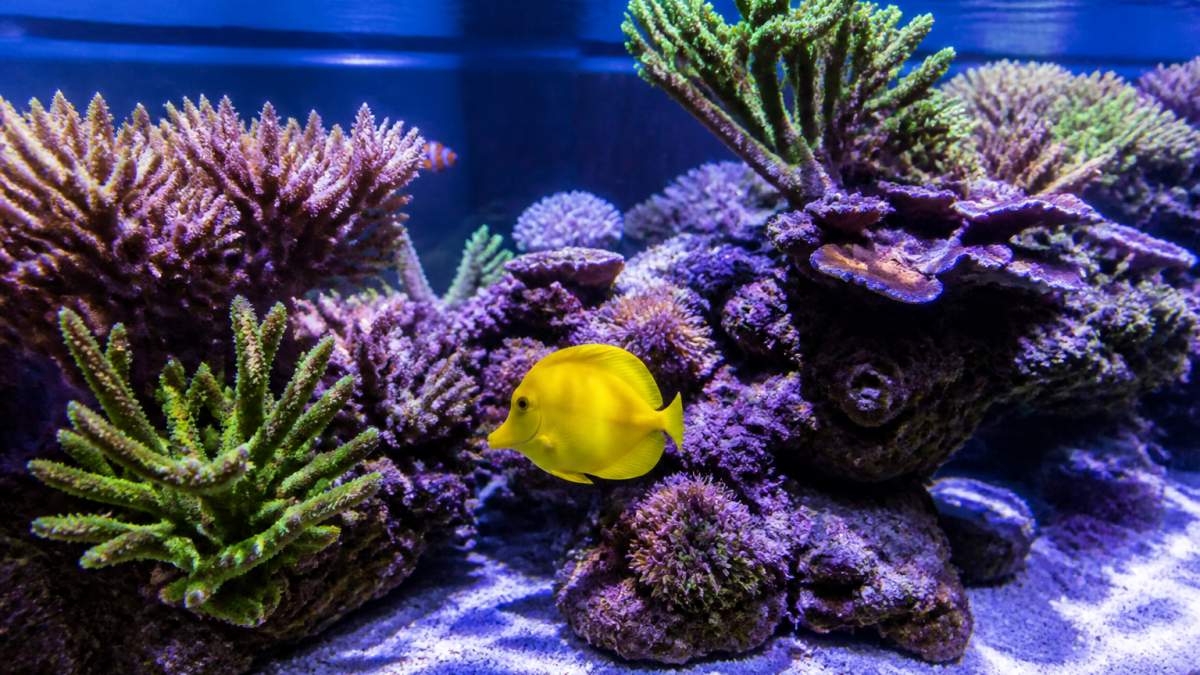
Causes of Low pH in a Reef Tank: A Diagnostic Walkthrough
Low pH in a reef tank almost always traces to excess carbon dioxide or depleted alkalinity. Work through the causes in order before you dose anything.
Step 1: Check the time of day. pH hits its low point just before the lights come on. A reading of 7.8 at 6 a.m. that climbs to 8.2 by afternoon is normal, not a problem.
Step 2: Look at the room. A sealed house with closed windows traps CO2. That gas dissolves into tank water and pulls pH down.
Step 3: Test alkalinity. If carbonate hardness has drifted low, pH becomes unstable. Alkalinity is the buffer that holds pH steady.
Step 4: Check surface agitation. Weak flow means poor gas exchange. CO2 sits in the water instead of leaving it.
Step 5: Review your dosing. Soda ash raises pH as a side effect, but it is dosed to hit an alkalinity target, not a pH target. Melev's Reef makes this point directly: dose for alkalinity, not for a pH reading.
Reef Tank pH Testing: Meters, Kits, and Calibration
Reef tank pH testing comes down to two tools: a liquid test kit for spot checks and a digital meter or probe for trends. Use both, and calibrate the meter. The unique angle here is accuracy: a drifted probe reads confidently and wrongly, and that bad number is what leads people to dose a tank that never needed it.
Start with the test kit. A liquid pH kit never drifts. Read it under consistent lighting and match the color against the card in daylight, not under blue LEDs.
Then add a digital meter for trends. A pH meter lets you log a curve. The catch is calibration.
A calibration protocol that actually holds
- Use fresh two-point solutions. Calibrate against pH 7.0 and pH 10.0 (or pH 4.0 for tanks that run low). Never calibrate with a single point.
- Let solutions and probe reach room temperature. Cold calibration solution biases the reading.
- Rinse the probe with distilled water between solutions and blot, do not wipe, the bulb.
- Calibrate every two to four weeks, and always after cleaning the bulb or replacing a probe.
- Check expiration dates on calibration solution. An opened bottle degrades; replace it every few months rather than trusting a year-old pouch.
- Store the probe wet in storage solution, never let it dry out, and clean biofilm gently with a soft brush.
- Replace the probe once it stops holding calibration across two consecutive attempts.
Cross-check before you dose
Before acting on any pH reading that would trigger a dose, confirm it:
- Take a fresh sample in a clean cup.
- Run the liquid kit and the meter on the same sample within a few minutes.
- If they disagree by more than about 0.2, trust the kit and recalibrate the meter.
- Re-test at the same time the next day before changing anything.
A single reading is a data point; a verified reading is a decision. If you are still assembling your testing bench, our aquarium testing kit selection covers pH, ammonia, nitrite, and nitrate so you can measure the whole picture, not one number in isolation.
Reading Daily pH Fluctuation and Trends
Daily pH fluctuation is normal and expected. The question is whether your swing is a healthy rhythm or a warning.
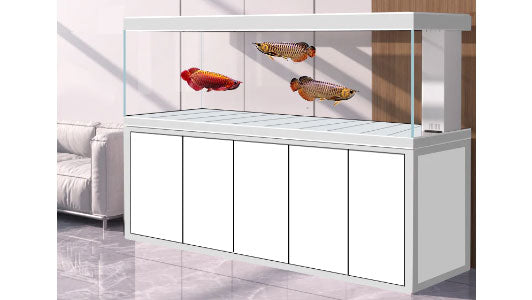
Aqua Dream Coral Reef Aquarium Tempered Glass Fish Tank 90 Gallon Complete Set →
How to Raise pH in a Saltwater Aquarium Safely
To raise pH in a saltwater aquarium safely, fix the CO2 first and dose second. Most low-pH tanks need better gas exchange, not more chemicals. What follows is a decision sequence, not a menu, work top to bottom and stop when the reading corrects.
Step 1: Confirm the reading is real
Before touching anything, verify with the cross-check in the testing section. A drifted probe is the most common reason people dose a tank that was fine. Re-test at the same time of day for two days.
Step 2: Rule out the daily low
pH bottoms out just before lights-on. A 7.8 at 6 a.m. that climbs to 8.2 by afternoon is normal. Only act on readings taken at a consistent time, ideally mid-photoperiod, or on a trend that stays low across the whole day.
Step 3: Fix gas exchange before dosing
Give gas-exchange changes 24 to 48 hours before judging them. This step alone corrects most low-pH tanks.
Step 4: Check alkalinity before any buffer
If carbonate hardness has drifted low, pH becomes unstable and no amount of buffer will hold it. Test alkalinity first. Dose to hit your alkalinity target, not a pH number, and let pH follow. Sodium bicarbonate raises alkalinity with little pH effect; soda ash raises pH more but is still an alkalinity tool. Melev's Reef makes this point directly: dose for alkalinity, not for a pH reading.
Step 5: Use kalkwasser only if steps 3 and 4 fall short
Limewater tops off evaporation and supports calcium and alkalinity. Drip it slowly through a dosing pump or a slow drip line, never dump it. Start at a conservative drip rate, measure pH and alkalinity the next day, and increase only if both stay in range.
The adjustment rules
- Never raise pH more than about 0.2 points in 24 hours. Faster changes reduce oxygen availability, irritate gills, and shock corals.
- Change one variable at a time. Make a single change, wait 24 hours, and measure again at the same time of day.
- Retest alkalinity and pH together after every adjustment so you can see which number moved.
- Stop when the trend is flat inside 7.8 to 8.5. A stable 7.9 beats a swinging 8.3.
How pH Interacts With Alkalinity, Calcium, and Dosing
For the full dosing sequence, our guide on stabilizing reef tank alkalinity walks through the five steps in order.
When Not to Intervene: Risks of Chasing a Number
The most common mistake in this hobby is dosing a tank that did not need it. A pH of 7.9 at dawn is not an emergency.
Rapid correction causes real harm. Raising pH quickly reduces oxygen availability, burns fish gills, and shocks corals that had acclimated to the current level. A tank that has run at 7.9 for months is a stable tank. Do not "fix" it.
When to leave the tank alone:
- The reading is inside 7.8 to 8.5 and the trend is flat
- The swing repeats daily and stays under 0.3 points
- Corals are extending, fish are feeding, and algae is under control
When to act:
- pH drops below 7.8 and stays there
- The daily swing widens over several days
- Alkalinity is falling between tests
- Animals show stress: closed polyps, labored breathing, faded color
Change one variable at a time. Give it a day. Then measure.
Equipping Your System for Stable Saltwater Tank pH
At AquaDreamUSA, we have supplied reef systems since 1999.
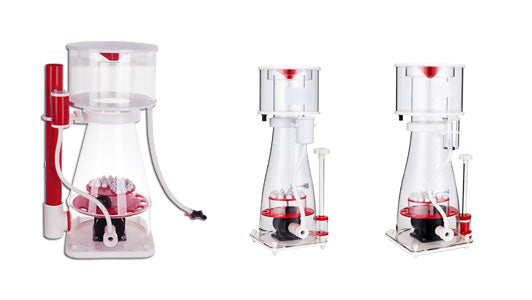
The 90-gallon coral reef aquarium complete set, at $2,799.00, includes a 920 GPH submersible pump, a sump with a water capacity of 25 gallons, a protein skimmer, and an LED light. The set is designed to support coral reef saltwater marine life. You can also shop our saltwater aquarium supplies reef marine essentials to complete your setup. For a broader look at gear, browse our premium fish tank equipment and saltwater aquarium filtration systems.

| Setup Need | What It Does for pH | Where to Start |
|---|---|---|
| Surface agitation | Drives off CO2 | Return pump and powerhead |
| Organic removal | Reduces acid production | Protein skimmer |
| Buffering capacity | Holds pH steady | Alkalinity testing and dosing |
| Accurate measurement | Reveals the trend | pH meter plus test kit |
| Consistent salinity | Keeps chemistry predictable | Refractometer and top-off |
Frequently Asked Questions
What is the ideal pH range for a saltwater tank?
Published guidance gives different acceptable pH ranges, so there is no single universally agreed number. Some sources cite 8.0-8.4, while Bulk Reef Supply reports successful coral reef operation from 7.8-8.5. Rather than chasing one reading, aim for a stable saltwater tank pH inside a defensible band and watch the trend over days. Stability matters more than hitting an exact figure, because corals and fish tolerate a consistent range better than a value that swings.
How quickly can I safely raise pH in a saltwater aquarium?
Move gradually. Rapid correction stresses fish and corals, so make small adjustments and re-test before adding more. Soda ash raises pH but should be dosed to maintain a specific alkalinity level, not to chase a pH target in isolation, as Melev's Reef cautions. Improve gas exchange first through aeration and ventilation, then correct alkalinity, and only then consider a buffer. Spread any dosing across the day and confirm each change with a calibrated meter before the next step.
Does opening a window or improving ventilation raise aquarium pH?
It can help. Low pH in a reef tank often traces to excess carbon dioxide from indoor air, and better gas exchange lets CO2 off-gas. Opening a window, running a line to an outside air source for the skimmer intake, or increasing surface agitation all support that exchange. Test pH before and after a ventilation change to see whether CO2 is your actual cause, rather than assuming it and dosing a buffer you did not need.
Can alkalinity affect pH in a reef tank?
Yes. Alkalinity and pH are linked, which is why dosing to hold a steady alkalinity level usually stabilizes pH as a side effect. Soda ash raises pH while it lifts alkalinity, while other supplements affect alkalinity with less pH impact. Test both together and treat alkalinity as the parameter you control, letting pH follow. Chasing pH directly with buffers while alkalinity drifts is a common way to create the instability you were trying to fix.
Stable pH is a plumbing and testing problem, not a chemistry problem. Get the flow right, calibrate your probe, and test alkalinity before you dose anything. Most tanks settle within a month once those three habits are in place.
AquaDreamUSA builds complete reef systems with the pump, sump, skimmer, and lighting matched to work together. Browse our coral reef aquariums and get a system that holds its parameters from day one.